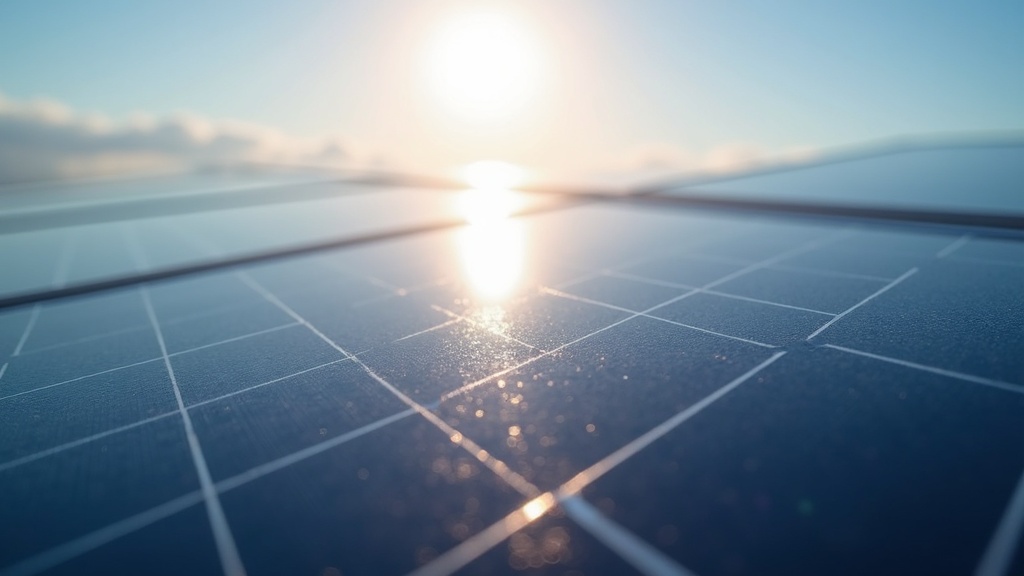
A solar cell converts sunlight into electricity through the photovoltaic effect: photons striking a semiconductor material (usually silicon) knock electrons loose, and a built-in electric field inside the cell pushes those loose electrons in one direction, creating a flow of direct current. That current is then combined across many cells in a panel and converted into the alternating current your home actually uses. No moving parts, no combustion — just light hitting a specially structured material.
The material that makes it possible: doped silicon
Most solar cells are built from silicon that has been deliberately altered, or “doped,” with trace amounts of other elements to give it useful electrical properties. One layer is doped to have extra free electrons (called the n-type layer); the layer beneath it is doped to have “holes” where electrons are missing (the p-type layer). Where these two layers meet is called the p-n junction, and it’s the single most important feature of a solar cell.
At that junction, an electric field forms naturally, even before any light hits the cell. This field is what gives the cell direction — it’s the reason electrons flow one way instead of just jittering randomly once they’re freed.
What happens when light hits the cell
Sunlight arrives as packets of energy called photons. When a photon with enough energy strikes the silicon, it can knock an electron loose from its atom, leaving behind a hole. Left alone, that electron would likely just fall back into a hole nearby and release its energy as heat, producing nothing useful. But because the freed electron is near the p-n junction’s electric field, it gets pushed toward the n-type layer while the hole is pushed toward the p-type layer.
That separation is the whole trick. Once electrons are gathered on one side and holes on the other, you have a voltage — the same basic concept as a battery. Metal contacts on the front and back of the cell (the thin grid lines you can see on a panel’s surface) collect this separated charge and give it a path to flow through an external circuit, which is what turns it into usable current rather than just a static charge sitting in the material.
From single cell to full panel
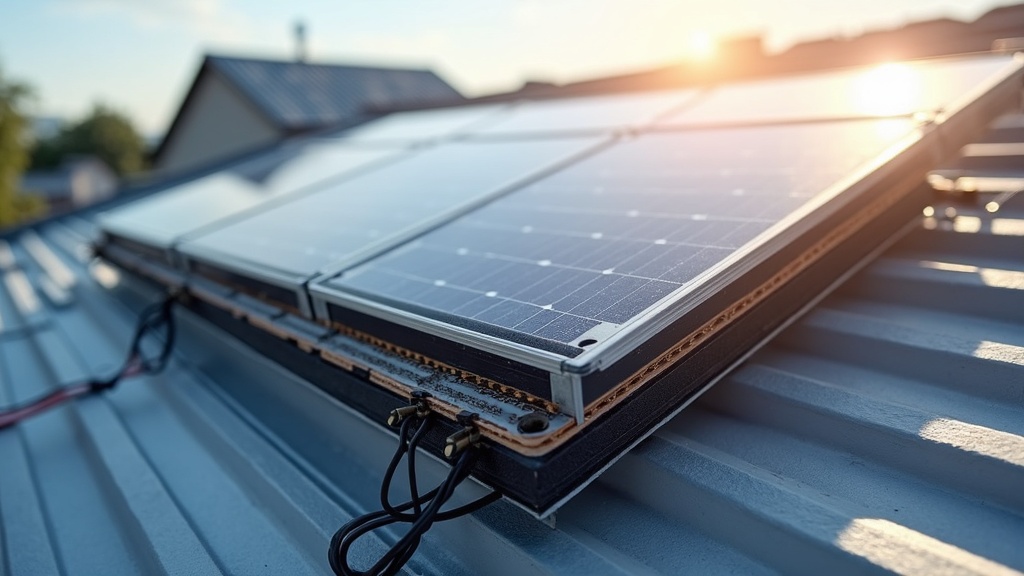
A single solar cell produces a small amount of voltage — not enough to power anything meaningful on its own. That’s why individual cells are wired together in series and parallel combinations, then sealed under tempered glass and a weatherproof backing to form the panel you see on a roof or in a ground-mounted array. Wiring cells together adds up their voltage and current output the way wiring batteries in a flashlight does. For a broader look at how those assembled panels perform out in the field, see how solar panels actually work.
Direct current in, alternating current out
The electricity a solar cell produces is direct current (DC) — electrons flowing steadily in one direction, the same type of current a battery produces. Homes and the electric grid run on alternating current (AC), where the direction of flow reverses many times per second. An inverter, a separate piece of equipment connected to the solar array, handles that conversion. Depending on the system design, this might be one central inverter for the whole array or smaller “microinverters” attached to each panel. The inverter is also where the system synchronizes its output with the grid’s voltage and frequency, which matters if the home is connected to the utility through a formal interconnection agreement.
Why panel angle, shading, and temperature all matter
Because the process depends on photons striking the semiconductor material directly, anything that reduces the amount or intensity of light reaching the cells reduces output. A few structural realities follow from that:
- Shading is disproportionately costly. Even partial shade on one part of a panel can drag down output for the whole string of cells it’s wired into, depending on the electrical configuration.
- Angle and orientation affect how much light lands on the cell surface relative to how much simply glances off, which is why installers evaluate roof pitch and compass direction before placing panels.
- Heat reduces efficiency slightly. Counterintuitively, solar cells generally produce electricity a bit less efficiently as they get hotter, even though hot weather usually means more sunlight.
- Material quality and cell design set the ceiling on what percentage of sunlight energy actually becomes usable electricity — current commercial panels typically convert a minority of the light energy that hits them, with the rest lost as heat or reflection.
These factors are part of why the same panel model can produce different amounts of electricity depending on where and how it’s mounted — a question explored in more detail in coverage of rooftop versus ground-mount solar.
Efficiency and degradation over time
No solar cell converts 100% of the sunlight energy it receives into electricity — some light passes through, some reflects off the surface, and some energy is lost as heat during the conversion process itself. Manufacturers publish efficiency ratings for their cells and panels, and these ratings, along with expected performance decline over decades of exposure to weather and UV light, are covered in more depth in a dedicated look at solar panel efficiency and degradation over time.
Where this fits into a home energy system
Understanding the cell-level physics helps make sense of decisions further down the chain — like whether a household’s usage pattern benefits from adding a home battery to store daytime production for evening use, or how a utility’s net metering arrangement credits electricity sent back to the grid. It also explains why some homes participate in community solar arrangements instead of installing panels directly, since the underlying conversion process is identical — only the ownership and location of the panels differ.
Financial questions around solar — what incentives exist, what they’re worth, and how long they last — are a separate matter from the physics, and they vary significantly by location and change over time. The Policy & Incentives section covers how programs like tax credits and rebates generally function, and how to verify what currently applies to a specific address is discussed in how solar tax credits and rebates work.
Frequently asked questions about how solar cells work
Why do solar panels produce DC electricity instead of AC?
Solar cells produce DC because the physics of the photovoltaic effect pushes electrons in one steady direction through the built-in electric field at the p-n junction. Homes and the grid use AC, so an inverter is required to convert the cell’s output before it can power household appliances.
Do solar cells work when it’s cloudy?
Solar cells still produce electricity in cloudy or overcast conditions because diffuse light still contains photons capable of freeing electrons — output is simply lower than under direct, unobstructed sunlight. The exact reduction depends on cloud thickness, panel type, and local weather patterns.
What is the difference between a solar cell and a solar panel?
A solar cell is the individual semiconductor unit that performs the actual photon-to-electron conversion. A solar panel is an assembly of many cells wired together and sealed under glass and a frame, which is what’s typically installed on a roof or ground mount.
Why does shade hurt solar panel output so much?
Because cells are often wired in series strings, shading even part of one cell can restrict current flow for the entire string it’s part of, similar to one dim bulb in an old-style series-wired string of lights. System design, including microinverters or power optimizers, can reduce but not eliminate this effect.
How long do solar cells keep working?
Solar cells don’t stop working abruptly; instead, they gradually produce less electricity over decades of sun and weather exposure. Manufacturers typically specify expected performance over a stated number of years, but actual degradation rates vary by product and climate, which is a separate topic from the cell physics itself.
The Cleaner Energy publishes general information about clean energy technology, not financial, tax, legal or engineering advice. We are writers and editors, not installers, contractors or financial advisers. Incentives, rebates, utility rates and equipment costs vary by location and change over time — confirm current figures with the official program administrator, your utility, or a licensed local professional before making a purchase or installation decision.