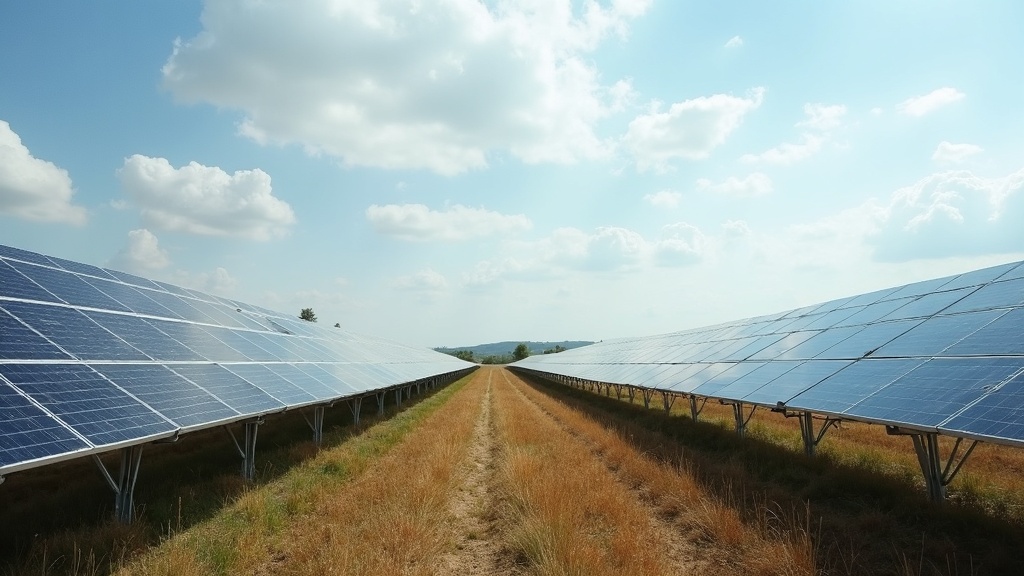
Community solar is a way to get credit for solar electricity generated at a shared, off-site array — usually a field or rooftop installation — without putting panels on your own home. You subscribe to or purchase a share of the project’s output, and that share shows up as a credit on your electric bill. It exists because many households can’t put panels on their own roof, whether due to renting, shading, roof condition, or budget, but still want a stake in solar generation.
The concept is straightforward, but the mechanics — how credits are calculated, what you’re actually paying for, and what happens if you move — vary a lot depending on where you live and which utility serves you. This piece walks through how the model works, who tends to qualify, and what questions are worth asking before signing anything.
How community solar actually works
A developer builds a solar array — often several acres of ground-mounted panels, sometimes a large rooftop or parking canopy — and connects it to the local utility grid rather than to a single building. That’s a structural difference from rooftop vs ground-mount solar installed on an individual property: a community project serves many subscribers at once through the shared grid, not through a direct wire to any one house.
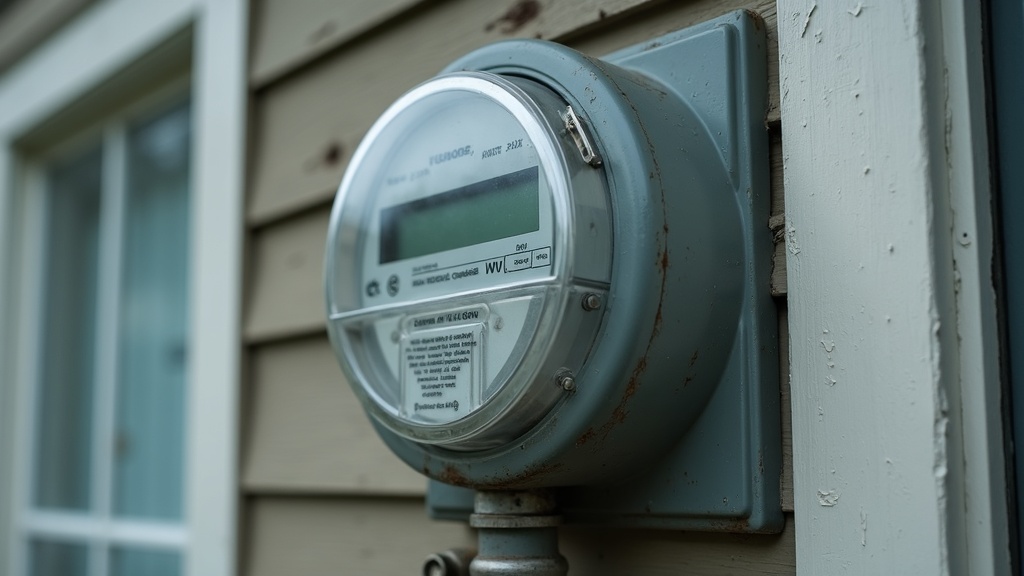
Households, renters, and sometimes small businesses sign up for a portion of that array’s output — expressed as a percentage, a number of panels, or a kilowatt allocation. As the array generates electricity, the utility (or a program administrator working with the utility) calculates how much of that generation belongs to each subscriber and applies a credit to their monthly bill. You still receive electricity from the grid the normal way; the community solar credit simply offsets part of what you’d otherwise owe.
Because the electricity itself is indistinguishable once it’s on the grid, community solar isn’t about receiving “solar electrons” specifically — it’s an accounting arrangement that lets subscribers share in the value of solar generation built somewhere other than their own property.
Subscription vs ownership models
Most community solar programs fall into one of two broad structures, though naming and details differ by state, province, and utility:
- Subscription model: You pay a monthly subscription fee or agree to a rate for your share of output, and in return receive bill credits. There’s typically no large upfront cost, and contracts often run for a defined term with cancellation terms that vary by program.
- Ownership or purchase model: You buy a defined share of panels or capacity in the project outright, sometimes with financing, and receive credits proportional to that ownership stake for as long as you hold it or until the project’s operating life ends.
Some programs blend elements of both, and low-income-focused programs in various jurisdictions structure pricing differently again. Because these arrangements involve contracts, fees, and credit calculations that function like a financial product, the details are worth reading carefully — that’s a matter for the program’s own disclosures and, where the numbers matter to your household budget, a conversation with a qualified local adviser rather than general information.
What determines your credit
The size of the bill credit you see each month depends on several factors that differ by location:
- Your subscribed share of the array’s total capacity or output.
- The project’s actual generation, which varies with weather, season, and the array’s location — similar to the seasonal and long-term output patterns described in solar panel efficiency and degradation over time, since community arrays use the same panel technology and are subject to the same gradual output decline.
- The credit rate set by the utility or program administrator, often tied to a formula approved by a state public utility commission or equivalent regulator.
- Any subscription fee or discount built into the program’s pricing structure.
None of these figures are standard nationally, let alone internationally — credit rates, program availability, and even whether community solar is legally permitted at all depend on state or provincial policy and the specific utility’s tariff structure. The only reliable way to know what a given program would mean for your bill is to ask the program administrator or utility directly for current figures rather than relying on a marketing estimate.
Who tends to be eligible
Eligibility rules differ by program, but common factors include:
- Living within the same utility service territory as the project, sometimes within the same county or region.
- Having an active account with the utility that operates or interconnects with the program.
- Renters being eligible in many programs, since no rooftop access or homeownership is required — a key difference from installing your own system.
- Income-qualified programs in some states or regions offering priority access or adjusted pricing for lower-income households.
Availability itself is uneven. Community solar exists under specific enabling legislation or utility policy in some states and provinces and not in others, and even where it exists, project capacity can be limited or fully subscribed. Checking with your utility or a state energy office is the only way to confirm whether a program is currently open near you.
How this compares to installing your own system
Community solar and a rooftop or ground-mounted system on your own property solve a similar underlying goal — access to solar-generated electricity — through different mechanisms. Understanding how solar panels actually work helps clarify the distinction: with your own system, panels convert sunlight to electricity that’s used or exported directly at your property, and you typically own or finance the equipment. With community solar, you own no equipment at all; you’re a subscriber to output generated elsewhere, with the credit relationship managed through billing rather than through a wire on your roof.
That trade-off matters differently depending on circumstances. A renter or someone with a heavily shaded or structurally unsuitable roof may find community solar is the only practical route to participating in solar generation at all. A homeowner weighing the two options is really weighing a contract-based credit arrangement against equipment ownership — and if you’re exploring the rooftop route as an alternative or a next step, the questions in what to ask a solar installer before you sign cover the ownership side of that comparison. The broader solar energy category on this site covers both paths in more depth.
What to ask before signing up
Community solar contracts are legal and financial agreements, even when they’re framed simply as bill credits. Before enrolling, it’s worth getting clear answers — from the program administrator, not a sales representative — on questions such as:
- Is the program administered or regulated by a state/provincial utility commission, and where can the terms be verified independently?
- What happens to the credit rate if regulations or tariffs change during the contract term?
- Are there cancellation fees, and what happens if you move within or outside the utility’s service territory?
- How is the subscription fee structured relative to the credit — is there a guaranteed minimum benefit, and under what conditions could that change?
- Who owns and maintains the array, and what happens to subscriber credits if the project is sold, decommissioned, or underperforms?
Because incentive structures, utility tariffs, and program rules change and can expire or be replaced, the only durable answer to “what will this actually cost or credit me” is the current documentation from the program administrator or utility — not an estimate from a brochure or a salesperson’s projection.
Frequently asked questions about community solar
Is community solar the same as installing solar panels on my roof?
No. Community solar means subscribing to a share of a separate, off-site array and receiving bill credits, while rooftop solar involves owning or financing equipment installed on your own property that generates electricity directly for your home.
Can renters sign up for community solar?
Often yes — many programs are designed specifically for people who can’t install their own panels, including renters, since eligibility is usually based on your utility account and service territory rather than home ownership or roof access.
How much can I save with community solar?
Savings, if any, depend on the program’s credit rate, subscription fee, and your usage, all of which vary by location and change over time. Ask the program administrator or your utility for current figures rather than relying on projected estimates.
What happens to my community solar subscription if I move?
It depends on the program and whether your new address is within the same utility service territory. Some programs allow transfers, others require cancellation, and terms should be confirmed directly with the program administrator before signing up.
Is community solar available everywhere?
No. Availability depends on state or provincial policy and utility programs, and it does not exist in every region. Checking with your local utility or a state energy office is the reliable way to confirm current availability near you.
The Cleaner Energy publishes general information about clean energy technology, not financial, tax, legal or engineering advice. We are writers and editors, not installers, contractors or financial advisers. Incentives, rebates, utility rates and equipment costs vary by location and change over time — confirm current figures with the official program administrator, your utility, or a licensed local professional before making a purchase or installation decision.