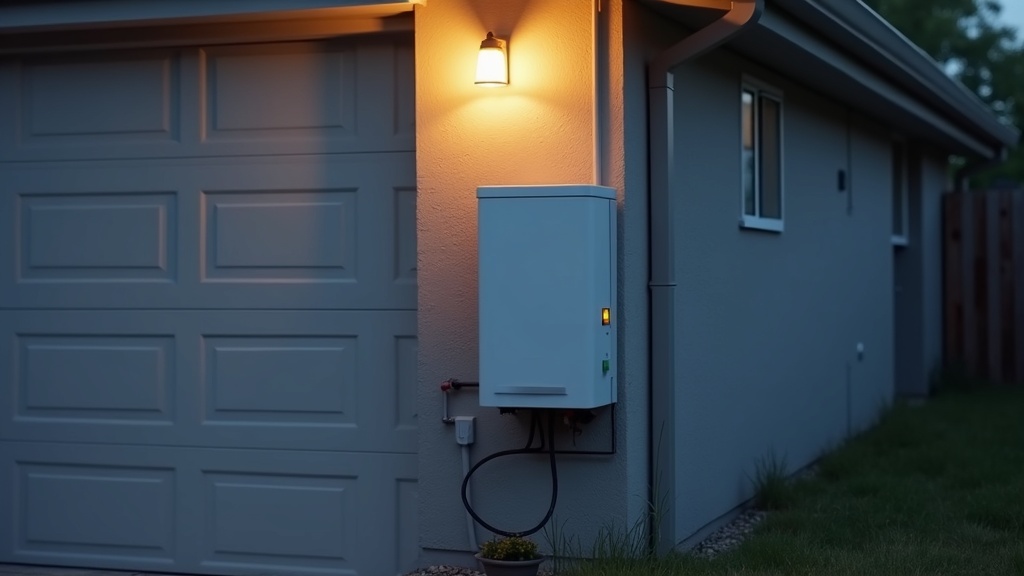
A home battery storage system works by taking electricity — usually from rooftop solar panels, sometimes from the grid — and holding it chemically inside battery cells until a home management system decides to release it back as usable power. That decision is governed by software watching your home’s demand, the battery’s charge level, and whatever rules you or your utility have set. The result is a box on a wall that can shift power in time: storing sunshine at noon to use it at night, or holding a reserve for when the grid goes down.
The core components
Strip away the marketing and a home battery system is really four things working together:
- The battery cells — the actual chemical storage medium, grouped into modules inside a cabinet.
- An inverter — converts the direct current (DC) stored in the battery into the alternating current (AC) your home’s outlets and appliances use, and back again during charging.
- A battery management system (BMS) — monitors cell temperature, voltage, and charge state, and protects the battery from being pushed outside safe operating limits.
- A home energy management controller — the logic layer that decides when to charge, when to discharge, and when to draw from the grid instead, based on settings, solar production, and sometimes utility signals.
Some systems bundle the inverter with the battery in one cabinet; others use a separate inverter that also manages solar panels, described in more detail in our explainer on how solar panels actually work. The physical arrangement varies by manufacturer, but the four functions above are present in essentially every residential system.
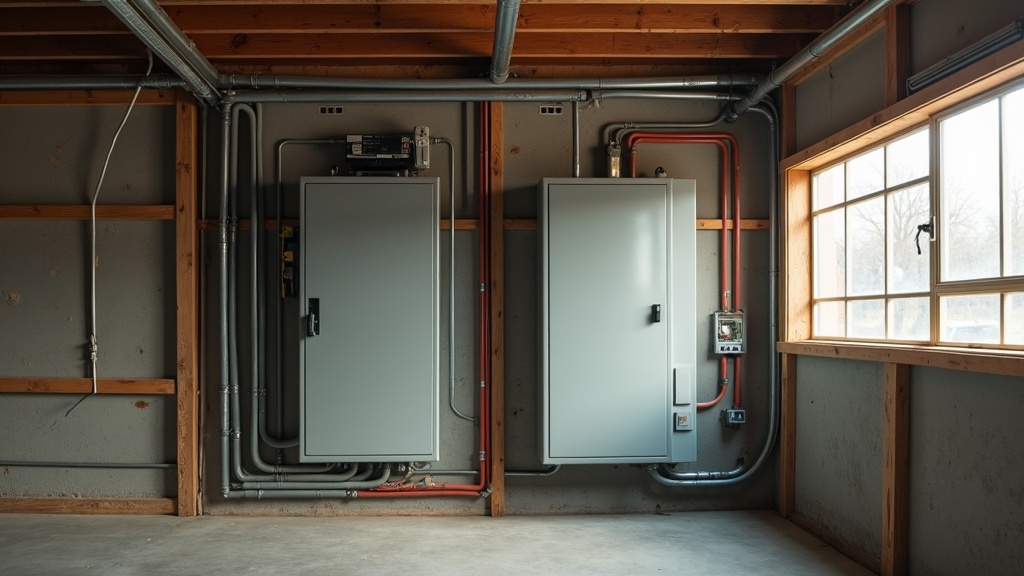
Charging: where the electricity actually comes from
A battery can be charged from two sources, depending on how the system is wired and configured:
- Solar-charged systems route excess solar production — power the home isn’t using in real time — into the battery instead of exporting it to the grid.
- Grid-charged systems (allowed in some places, restricted in others) pull electricity from the utility, often timed to periods when rates are lower, storing it for use later.
Many installations do both, and the balance between them is set by the homeowner or an installer during configuration, then adjustable afterward. Whether grid-charging is permitted, and whether it’s economically sensible, depends on your local utility’s rate structure and interconnection rules — this is a genuinely regional question, not a universal answer.
Discharging: how the battery decides to release power
Once charged, the battery doesn’t dump its stored electricity all at once. The management controller applies a strategy, and the common ones include:
- Self-consumption mode — the battery discharges to cover household loads whenever solar production drops below demand, reducing how much is pulled from the grid.
- Backup reserve mode — the system keeps a set percentage of charge untouched, held in reserve specifically for a grid outage.
- Time-of-use shifting — the battery discharges during hours when grid electricity is priced higher and recharges during cheaper hours, where such rate structures exist.
- Demand response participation — in some utility territories, batteries can be enrolled in programs where the utility (with homeowner consent) can call on stored capacity during peak grid stress, sometimes in exchange for a bill credit or incentive.
Most systems let you blend these priorities, but the available modes and how granular the controls are differ by manufacturer and by what your local utility’s interconnection agreement permits.
What happens during a power outage
This is where home batteries diverge sharply from a simple grid-tied solar system without storage. A solar array alone typically shuts down automatically during a grid outage — that’s a safety requirement so it doesn’t send power down the lines to utility workers making repairs. A battery system paired with the right transfer equipment can instead “island” the home: it disconnects from the grid, keeps a limited set of circuits or the whole panel running on stored (and sometimes solar-replenished) power, and reconnects automatically once utility power returns.
Whether a system can power your whole house or only designated critical circuits during an outage depends on the battery’s capacity, its continuous power output rating, and how the electrical panel was configured — details worth raising directly with whoever designs the system, alongside the broader questions covered in what to ask a solar installer before you sign.
Battery chemistry: what’s actually inside the box
Most residential systems on the market today use one of a small number of lithium-based chemistries, most commonly lithium iron phosphate (LFP) or nickel manganese cobalt (NMC) variants. These differ in energy density, thermal behavior, and expected cycle life, but explaining the tradeoffs of a specific chemistry in a way that applies to your situation is a job for the equipment’s technical documentation or a licensed professional evaluating your installation — not a general information article. What’s useful to know at a high level is that the BMS mentioned earlier exists specifically to keep whichever chemistry is inside operating within safe temperature and voltage ranges over thousands of charge cycles.
Sizing: why “how big” isn’t a fixed number
Battery capacity is usually described in kilowatt-hours (kWh) of storage and kilowatts (kW) of continuous output. Both numbers matter, and neither has a single “right” answer — sizing depends on:
- Your household’s actual electricity consumption pattern, which a proper home energy audit can help clarify.
- How much solar generation capacity is available to recharge the battery.
- Whether the goal is backup power for essential circuits, daily bill management, or both.
- Local climate — batteries generally lose some efficiency in extreme cold, and enclosure or placement decisions account for that.
A system sized for a few hours of essential backup looks very different from one sized to run an entire home, including things like a heat pump or an EV charger, for an extended period. If you’re weighing a battery alongside other home electrification projects, it’s worth looking at how loads like HVAC (see heat pumps vs traditional HVAC systems) or a home EV charger draw power, since those larger loads directly affect what capacity actually makes sense.
How batteries fit with solar and the broader grid
A battery doesn’t generate electricity — it stores and redistributes it in time. Pairing it with rooftop solar, covered more broadly in our solar energy section, is the most common residential setup, but batteries are also installed without solar, charging purely from the grid to provide backup or to participate in utility rate arbitrage where that’s permitted. Some utilities and regions also offer community or virtual power plant programs that aggregate many home batteries together; participation rules, compensation structures, and eligibility vary widely and are set by the individual utility or program administrator, not by the equipment itself.
Efficiency improvements elsewhere in the home — better insulation, smarter thermostats, tighter building envelopes — reduce how much stored energy any given backup scenario needs to cover. Resources like how smart thermostats work and our broader home energy efficiency coverage are worth reading alongside battery research, since the two decisions interact directly.
Incentives and costs: what to actually check, not what the number is
Government and utility incentive programs for home battery storage exist in many places, sometimes as a tax credit, sometimes as a utility rebate or demand-response payment, sometimes tied to enrollment in a grid program. These programs change eligibility rules and values over time and differ by country, state or province, and even by individual utility territory. Rather than quoting a figure here that could be outdated by the time you read it, the reliable approach is to check directly with the official program administrator — in the U.S., resources like the U.S. Department of Energy’s home battery storage guidance or the DSIRE incentive database are good starting points for confirming what currently applies in a given location.
Frequently asked questions about home battery storage
How long can a home battery power a house during an outage?
It depends entirely on the battery’s stored capacity, which circuits are connected to it, and how much electricity those circuits draw. A system covering only essential loads can last much longer than one trying to run an entire home, especially without solar recharging it during the outage.
Do I need solar panels to have a home battery?
No. Batteries can be charged directly from the grid where local rules allow it, though pairing with solar is common because it lets the battery store free daytime generation instead of paying for grid electricity to charge it.
How many years does a home battery last before it needs replacing?
Lifespan is generally measured in charge cycles and calendar years together, and depends on the chemistry, how deeply it’s cycled, and temperature exposure. Manufacturer warranty documents specify expected cycle life and degradation limits, and are the correct place to check for a specific product.
Can a home battery run my whole house or just some circuits?
Both configurations exist. Whole-home backup requires enough capacity and continuous output to handle everything at once, while a “critical loads” setup wires only selected circuits — like refrigeration or a sump pump — to the battery’s backup panel.
Is a home battery worth it without a rebate or tax credit?
That depends on your goals, local electricity rates, outage frequency in your area, and whether incentives apply — none of which this article can calculate for you. It’s a question best worked through with a licensed local professional using your actual usage data and current program terms.
The Cleaner Energy publishes general information about clean energy technology, not financial, tax, legal or engineering advice. We are writers and editors, not installers, contractors or financial advisers. Incentives, rebates, utility rates and equipment costs vary by location and change over time — confirm current figures with the official program administrator, your utility, or a licensed local professional before making a purchase or installation decision.