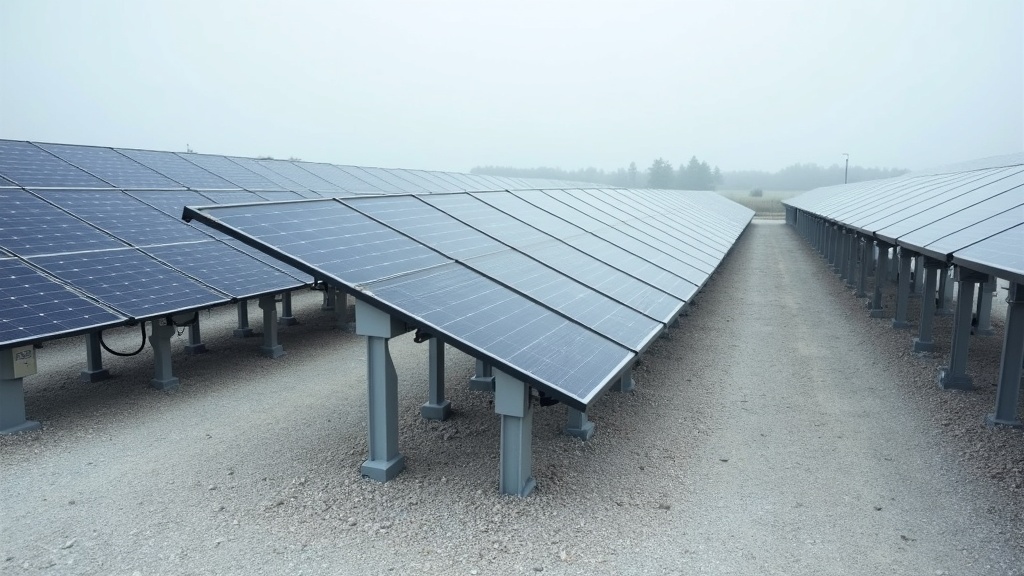
Bifacial solar panels have solar cells on both the front and back of the module, so they generate electricity from direct sunlight hitting the front and from reflected light bouncing onto the back. Whether that second surface actually adds meaningful power depends almost entirely on what’s underneath and behind the panel — a ground-mounted array over light gravel can gain a real double-digit percentage, while a panel bolted flush to a rooftop often gains almost nothing. The mounting setup, not the panel itself, is usually what decides if the bifacial premium is worth paying.
What makes a panel “bifacial” in the first place
A standard, or monofacial, solar panel has a light-absorbing layer of cells on the front and an opaque backsheet — usually a sheet of polymer — sealing the rear. Light that passes through gaps between cells or isn’t absorbed on the way in is simply lost. A bifacial panel replaces that opaque backsheet with either a second layer of glass or a transparent polymer sheet, and often uses a cell design that can collect light striking either face. The front still does the bulk of the work by capturing direct and diffuse sunlight the way any panel does — the underlying conversion process is the same one described in How Solar Panels Actually Work. The back adds a second, smaller income stream: light that has already bounced off the ground, a roof surface, snow, or nearby structures before reaching the panel.
Because bifacial modules are usually built as glass-glass laminates rather than glass-and-polymer, they also tend to be more rigid and somewhat heavier, and many are marketed with longer warranty periods. Those are manufacturing-side differences worth asking about, but they’re separate from the question this article focuses on: does the second face actually earn its keep on your site.
The physics behind the “back-side bonus”
The extra output from the rear face depends on three things working together, and all three have to be reasonably favorable for the bonus to be worth much:
- Ground reflectivity (albedo). Albedo is the fraction of light a surface bounces back rather than absorbs. Fresh snow and white gravel or crushed stone reflect a large share of incoming light; dark asphalt shingles, bare soil, and grass reflect comparatively little. The higher the albedo of whatever sits behind and below the panel, the more light is available for the rear cells to capture.
- Tilt angle and mounting height. A panel needs a clear line of sight to the reflective surface, and it needs to be tilted enough — and raised high enough off the ground — for reflected light to actually reach the back of the module at a useful angle. A panel sitting flush against a roof deck has almost no gap for light to bounce into.
- Row spacing and shading. In arrays with multiple rows, one row’s rear face can be partially shaded by the row behind it, or by its own racking and mounting hardware. Wider spacing between rows generally preserves more of the rear-side gain, at the cost of using more land or roof area per panel.
The U.S. Department of Energy’s solar research office and the National Renewable Energy Laboratory (NREL) both publish general background on how these panels and their industry-wide modeling tools work, and NREL’s photovoltaic research group has developed open modeling approaches specifically to estimate rear-side gain from a given combination of albedo, tilt, and row geometry rather than treating it as a fixed number — because it isn’t one. You can see the broader research context on NREL’s photovoltaic research pages and DOE’s solar photovoltaic technology basics.
The decision rule: when the premium is likely worth it
Bifacial panels typically cost more per watt than an equivalent monofacial panel. Whether that premium is worth paying comes down to a fairly simple rule: the more open, reflective, and elevated the mounting site, the more likely the bifacial bonus justifies the extra cost — and the more enclosed, dark, and flush the site, the less likely it does. The table below lays out the general pattern, based on how albedo, tilt, and clearance interact rather than on any single manufacturer’s claims.
| Mounting setup | Typical surface below/behind panel | Tilt & clearance | General bonus range | What it means for the premium |
|---|---|---|---|---|
| Elevated ground-mount, open field | White gravel, crushed stone, or seasonal snow cover | 25–40° tilt, several feet of ground clearance | Roughly 15–30% above an equivalent monofacial panel | The bonus is large enough that the premium often makes sense, subject to site-specific modeling |
| Ground-mount over natural ground | Grass, bare soil, or mixed vegetation | Moderate tilt, reasonable clearance | Roughly 5–15% | Worth evaluating case by case; depends heavily on ground cover and season |
| Tilted rooftop racking | Roofing material with moderate reflectivity, some standoff height | Some tilt and gap from the roof surface | Roughly 5–10% | Marginal; the extra cost may or may not be recovered depending on the rest of the system |
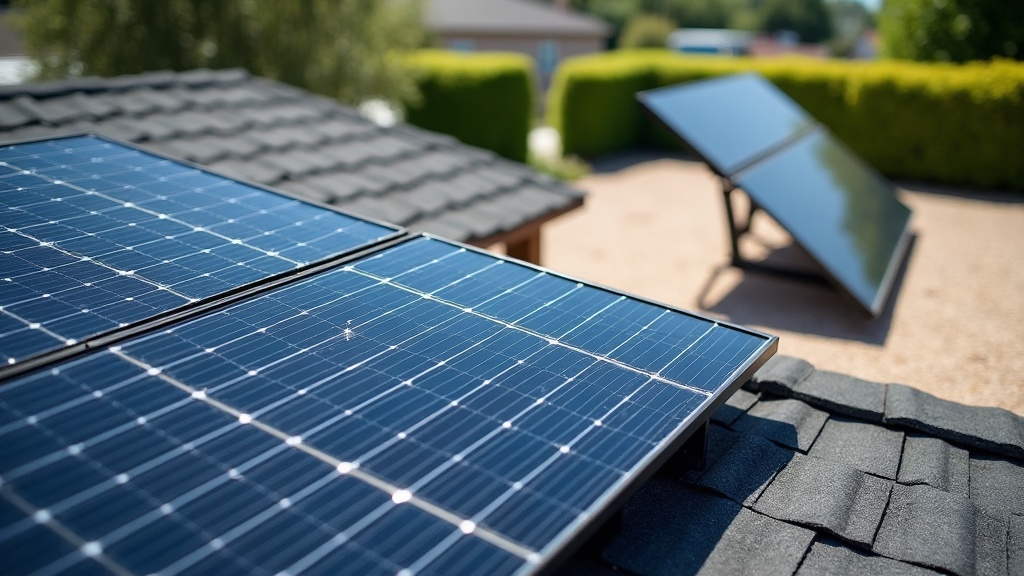
| Flush rooftop mount | Dark asphalt shingle or membrane, little to no gap | Low or no tilt, minimal clearance | Generally under 5% | The bonus is often too small to offset the price difference from a standard panel |
These are general patterns describing how the underlying physics behaves under different conditions, not a promise of what any specific roof or lot will produce — actual gain on a given site depends on the exact ground material, tilt, spacing, and how much of the year that condition holds, which is why serious system design uses site-specific modeling rather than a single published percentage. If a system is being pitched with a bifacial gain figure, it’s reasonable to ask what albedo and tilt assumptions that figure is based on.
Why rooftop residential installs rarely see the bigger numbers
Most home rooftop solar in the U.S. and elsewhere is mounted at a fairly low profile, tilted close to the roof pitch, with limited clearance underneath for airflow and, incidentally, for reflected light. Asphalt shingle — the dominant roofing material on U.S. houses — has relatively low albedo compared with reflective ground cover. That combination is exactly the scenario in the bottom row of the table above: the physical conditions that make bifacial technology shine simply aren’t present on a typical flush rooftop array. This is one of several practical differences covered in Rooftop vs Ground-Mount Solar: What Actually Differs, and it’s worth reading alongside any bifacial pitch aimed at a roof rather than a yard.
Ground-mount systems, carports, and utility-scale arrays are a different story. They’re often built with the tilt, elevation, and site prep needed to take advantage of reflected light deliberately — sometimes including light-colored ground cover installed specifically to raise albedo. That’s part of why bifacial technology has become common in utility-scale solar even where it remains a marginal choice for a typical home roof.
Other factors that affect the real-world payoff
Even on a favorable ground-mount site, a few other things shape how much of the theoretical bonus shows up on a bill:
- Inverter and racking compatibility. Some racking systems and mounting hardware shade a meaningful portion of the rear face; ask specifically how the proposed racking affects rear-side exposure rather than assuming any ground-mount rack is equally open underneath.
- Seasonal and weather variation. Snow cover raises albedo dramatically for part of the year in some climates and does nothing in others, so a bonus estimated from a snowy month isn’t representative of an annual average.
- Panel degradation. Bifacial and monofacial panels both lose output slowly over decades of service, and that general aging process — covered in Solar Panel Efficiency and Degradation Over Time — applies to both faces of a bifacial module, not just the front.
- System-level costs, not just panel cost. A bifacial premium is one line item in a quote that also includes racking, labor, inverters, and permitting. The panel technology itself is only one input into whatever the total project costs, and pricing, financing terms, and any applicable incentives are specific to the installer, the household’s location, and the program rules in effect at the time — not something a general information article can state as a figure.
Because incentive programs, utility rules, and interconnection requirements vary by state, utility territory, and country, and change over time, the only reliable way to check current terms is with the official program administrator or your utility — a starting point for finding legitimate programs is DSIRE, a publicly maintained database of state and utility incentive programs in the U.S. The Cleaner Energy’s own overview of that process is at How to Find Legitimate Clean-Energy Incentive Programs.
What to ask before paying more for bifacial
If a bifacial quote is on the table, the useful questions are about the site, not the panel spec sheet: what albedo and tilt assumptions were used to estimate the rear-side gain, how much ground clearance the racking actually provides, whether nearby rows or structures will shade the back face for part of the day, and how that estimated gain compares in dollar terms to the price difference from an equivalent monofacial system. These sit alongside the broader set of questions worth raising with any solar proposal, covered in What to Ask a Solar Installer Before You Sign. None of this is a judgment on whether bifacial technology is “better” in the abstract — it’s a request for the site-specific numbers that determine whether it’s better for the location and mounting setup actually being proposed. For broader context on how solar and other clean-energy technology fits together, the How Clean Energy Works hub and the Solar Energy archive cover the surrounding fundamentals.
Frequently asked questions about bifacial solar panels
Are bifacial solar panels worth it for a home roof?
Usually not by much, because most home roofs mount panels flush and low over dark shingle, which limits both the tilt and the reflective light needed for the rear face to add significant output — the bonus is often under 5%, which may not offset the higher panel cost.
Do bifacial panels work without a special mounting frame?
They can be installed like standard panels, but without elevation and tilt that expose the rear face to reflected light, the second side contributes very little; the panel still works as a front-side generator either way.
Does snow actually boost bifacial solar output?
Fresh snow reflects a large share of incoming light and can meaningfully raise rear-side output on an elevated, tilted ground-mount system during the months it’s present, but the effect is seasonal and doesn’t apply once the snow melts or on rooftop installs with little rear clearance.
The Cleaner Energy publishes general information about clean energy technology, not financial, tax, legal or engineering advice. We are writers and editors, not installers, contractors or financial advisers. Incentives, rebates, utility rates and equipment costs vary by location and change over time — confirm current figures with the official program administrator, your utility, or a licensed local professional before making a purchase or installation decision.