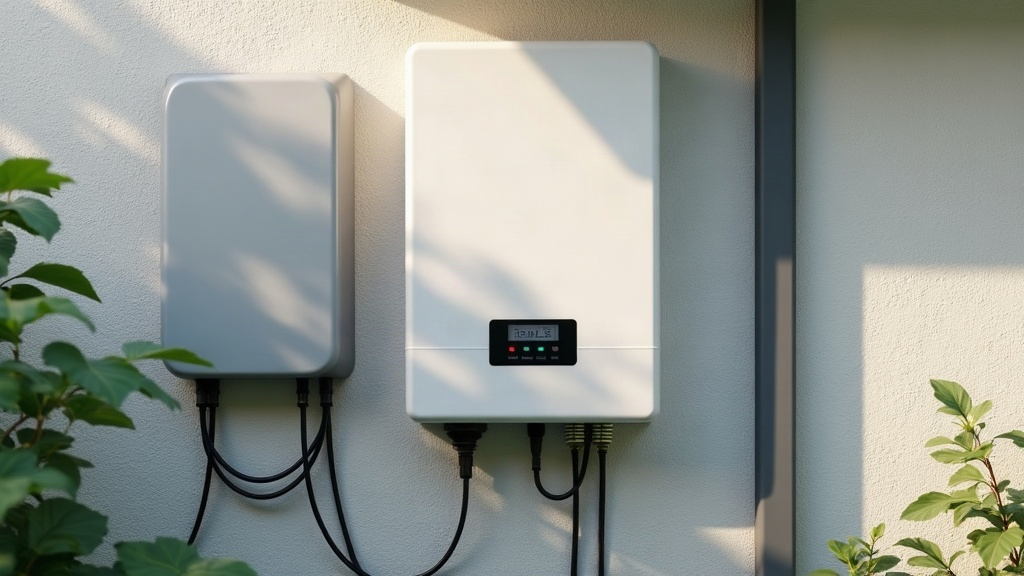
A string inverter converts power from a whole series of panels at one central box, while a microinverter converts power at each individual panel. That basic split drives most of the cost, shading, and monitoring differences you’ll hear about. But there’s a bigger question most comparisons skip: whether you already have, or plan to add, a home battery. That single fact — not roof shape — often decides which architecture actually fits.
How each system actually works
Solar panels produce direct current (DC). Homes and the grid run on alternating current (AC). Something has to convert one to the other. That’s the inverter’s job, and where that conversion happens is the whole difference between these two designs.
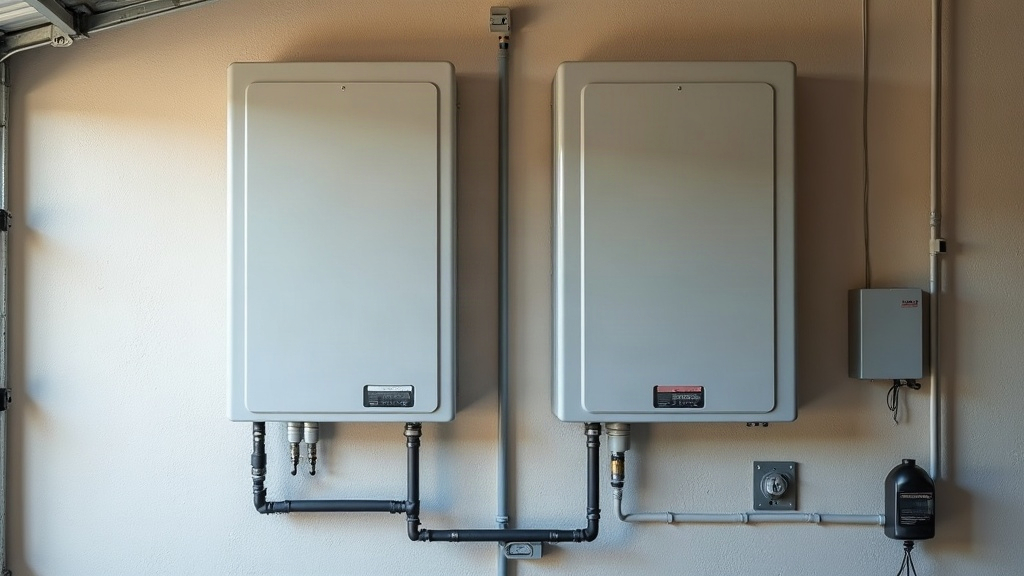
A string inverter sits in one location — often a garage wall or exterior wall near the utility meter. Panels are wired together in a series, called a string, typically ten to twenty panels depending on the system. All the DC power from that string travels to the single inverter for conversion. You can read more about the underlying process in our explainer on how solar panels actually work.
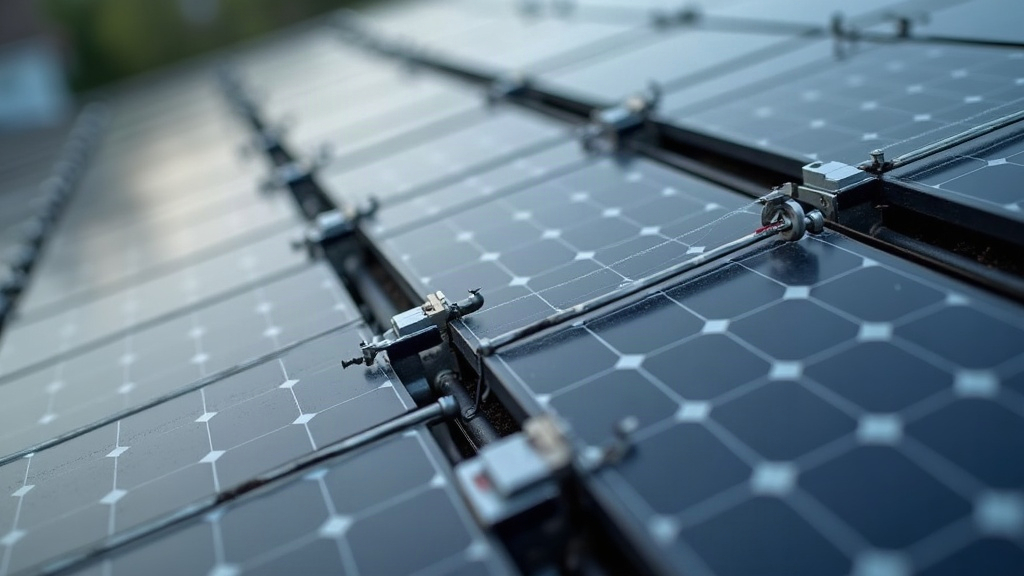
A microinverter system puts a small inverter on or near each panel. Conversion happens right there, panel by panel, before the electricity leaves the roof. Each panel effectively becomes its own small power station.
The tradeoffs everyone mentions — and what they mean in practice
Shading is the clearest difference. In a string system, panels in a string are linked electrically. If one panel is shaded — by a chimney, a tree branch, a vent pipe — the output of the whole string can drop, not just that one panel’s output. Microinverters isolate each panel, so a shaded panel affects only itself.
Cost usually runs the other way. String inverters are generally cheaper per system, since you’re buying one unit instead of one per panel. Microinverters add hardware cost, though that gap has narrowed over the years as the technology has scaled.
Monitoring granularity follows the same logic. Microinverters typically report performance per panel. String systems usually report at the string or system level, unless paired with add-on power optimizers that sit between the panel and inverter.
Warranty length differs too, and this one is often understated. Microinverters commonly carry longer manufacturer warranties, sometimes in the 20 to 25 year range, roughly matching panel warranties. String inverters more often carry warranties in the 10 to 12 year range, with the expectation that the unit may be replaced once during the system’s life. Ask any installer quoting a system to state the inverter warranty length in writing, separate from the panel warranty — they’re not the same document.
The question competing pages skip: what about the battery?
This is where the decision actually gets made, and it’s rarely explained clearly. Whether you should lean toward a string or microinverter setup depends heavily on whether a home battery is part of the plan now or later.
Home batteries store DC electricity. So does the solar array before conversion. That overlap creates two different ways to connect a battery to a solar system, and the inverter architecture you chose for the panels determines which path is available.
DC-coupled systems connect the battery directly to the DC side of the system, before the inverter. This requires a compatible string inverter or a hybrid inverter designed to manage both solar input and battery charge/discharge in the DC domain. Power gets converted from DC to AC once, at the point it’s actually used or exported.
AC-coupled systems are what you get by default with a microinverter array, since each panel already converts to AC on the roof. To store that power in a battery, it has to be converted back to DC for storage, then converted to AC again when it’s drawn out. That’s two extra conversions layered onto a system that already converted once per panel.
Each conversion step loses some energy as heat, a basic property of power electronics that the U.S. Department of Energy discusses in its overview of solar energy system design. Inverter efficiency generally runs in the mid-to-high 90% range per conversion step, so one extra round trip is not catastrophic — but it is a real, measurable loss that compounds over the system’s life, and it applies to every kilowatt-hour the battery ever stores and discharges.
Here’s the practical version of that rule:
| Your situation | What it usually means for inverter choice |
|---|---|
| No battery planned, ever | Either architecture works; decide on shading, cost, and monitoring instead |
| Battery planned at install | DC-coupled setup with a compatible string or hybrid inverter avoids the extra conversion step |
| Battery planned later, roof has shading issues | Ask specifically whether the quoted string/hybrid inverter supports adding a DC-coupled battery down the road — not all do |
| Existing microinverter system, battery added later | Battery will be AC-coupled by default, with the added conversion loss built in |
None of this means one architecture is universally better. It means the “right” choice depends on a decision you may not have made yet — whether storage is coming, and when. A system optimized purely for today’s roof shading, without asking that question, can lock in an AC-coupling penalty for the life of the battery. For background on how the storage side works once it’s connected, see our explainer on how home battery storage actually works, and on the chemistry choices behind different batteries in our piece on lithium-ion vs other home battery chemistries.
Other factors worth asking about
Roof complexity matters beyond shading. A roof with multiple faces, different angles, or partial shade at different times of day tends to favor panel-level conversion, since each panel’s output isn’t tied to its neighbors. A simple, unshaded, single-plane roof removes much of that argument.
Maintenance and failure points differ too. A string inverter is one accessible box; if it fails, it’s one part to diagnose and replace, usually at ground level. Microinverters are distributed across the roof. A single unit failing affects only its panel, but diagnosing and replacing a roof-mounted unit generally requires a service visit to the roof itself, not the garage wall.
System size and future expansion plans matter as well. Adding panels to an existing string system later can be constrained by string sizing rules the original design followed. Microinverter systems are often described as more modular, since each new panel simply adds its own inverter, though actual compatibility still depends on the specific product line and its installation-year firmware.
Utility interconnection rules can also shape what’s practical in a given territory — our overview of utility interconnection for home solar is a useful companion read here, since some utilities have equipment or monitoring requirements that favor one inverter type’s reporting format over another. Rules like this vary by state, utility, and sometimes by circuit, so what applies to a neighbor’s system is not guaranteed to apply to yours.
Questions worth putting to anyone quoting a system
- Is this a string, microinverter, or hybrid inverter design, and why was it chosen for this specific roof?
- If a battery isn’t in the current quote, is one planned for later — and would it be DC- or AC-coupled given this inverter?
- What’s the inverter warranty length, in writing, separate from the panel warranty?
- How is monitoring reported — per panel, per string, or system-wide?
- What happens to net metering credit calculations if inverter-level losses differ between architectures? Rules for that vary by utility, and our explainer on net metering covers how export credit is generally calculated.
These are the same kind of questions worth raising in any quote conversation — our broader list of questions to ask a solar installer before you sign covers more ground beyond inverters specifically.
The bottom line on architecture
Neither string inverters nor microinverters are categorically superior. Each trades differently on cost, shading tolerance, monitoring detail, warranty length, and — critically — how cleanly a battery fits in later. The National Renewable Energy Laboratory’s solar research overview covers the underlying power electronics in more technical depth if you want to go further. For most households, the honest starting point isn’t “which inverter is better” but “what’s our battery plan, and does this inverter design support it without extra conversion steps.” Get a firm answer to that before comparing prices, and the rest of the comparison gets a lot simpler. For a wider view of how solar fits into a home energy plan, our solar energy section and the energy storage and batteries section are good places to keep reading.
The Cleaner Energy publishes general information about clean energy technology, not financial, tax, legal or engineering advice. We are writers and editors, not installers, contractors or financial advisers. Incentives, rebates, utility rates and equipment costs vary by location and change over time — confirm current figures with the official program administrator, your utility, or a licensed local professional before making a purchase or installation decision.