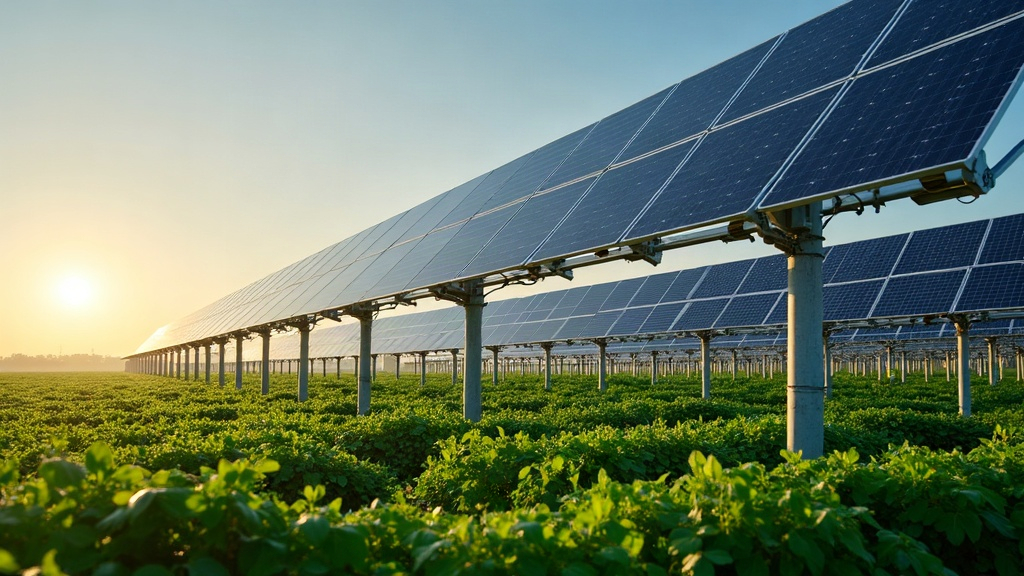
Agrivoltaics means putting solar panels and farming on the same acre at the same time — usually by mounting panels higher, spacing rows wider, or angling them vertically so crops or animals can still use the ground underneath. It works for some crops and livestock far better than others, because light, machinery clearance, and root depth all push in different directions. Whether it fits a given farm depends less on the idea and more on specific numbers: panel height, row spacing, and how much sunlight the panels let through.
This isn’t a new concept dressed up with a new word. Researchers have been measuring crop yields and light levels under solar arrays for over a decade, and the results vary a lot by crop, climate, and array design. The U.S. Department of Energy tracks this work through its Solar Energy Technologies Office, which has published overviews of how dual-use solar projects are designed and studied on agrivoltaics. The goal below is practical: give you the decision rules that determine fit before anyone pitches you a system.
Why height and spacing matter more than panel count
A standard ground-mount solar array is built to maximize electricity per acre. Panels sit low, rows sit close, and the ground between them is treated as empty space. Agrivoltaics inverts that logic. The array has to leave room for a tractor, a grazing animal, or a plant’s light needs. That usually means fewer panels per acre than a conventional ground-mount design covered on our rooftop vs. ground-mount solar page, traded for continued use of the land underneath.
Three variables decide whether a specific crop or animal can work under a given array:
- Clearance height — the vertical space between the ground and the lowest edge of the panels, which determines what equipment can pass underneath.
- Row spacing — the gap between panel rows, which controls how much direct sun reaches the ground at midday.
- Light transmission — the share of sunlight that still reaches the plants, set by panel tilt, row density, and whether the panels are solid or semi-transparent.
Get any one of these wrong for a given crop, and the result is either a yield that drops too far or a panel array that can’t physically coexist with the farming operation.
Matching crop and livestock type to panel design
These are general ranges drawn from published agrivoltaics research and pilot projects, not a specification for any one site. Soil, climate, panel brand, and local crop variety all shift the numbers. Treat this as a starting filter — confirm anything specific with an agronomist and a solar designer before committing to a layout.
| Crop / livestock type | Typical clearance height | Row spacing | Light transmission needed | Why |
|---|---|---|---|---|
| Leafy greens, herbs | Around 6 ft (1.8 m) | Moderate; enough for hand tools or small equipment | 30% or more direct light | Many leafy crops tolerate partial shade and can show less heat stress and water loss under panels. |
| Root vegetables | 6–8 ft | Wide enough for cultivation equipment | 40–50% | Bulb and root development generally needs more sustained light than leaf crops. |
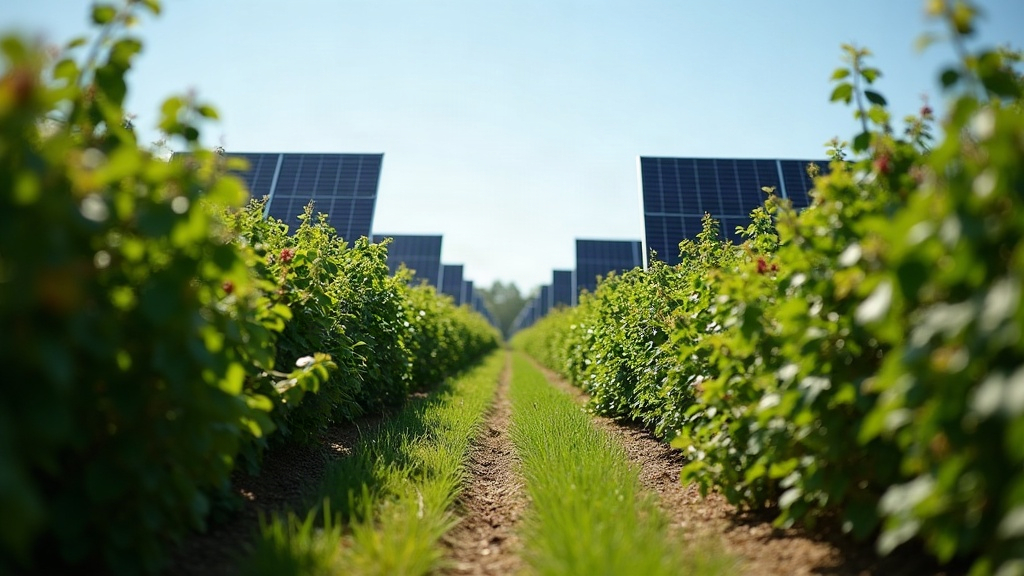
| Berries, vine crops | Vertical bifacial panels, standing at full height between rows | Row spacing set by the crop’s own row width | Up to roughly 90% light passage | Vertical bifacial panels face east-west and let most daylight reach the plants while still capturing morning and evening sun on both panel faces, a design discussed on our bifacial solar panels page. |
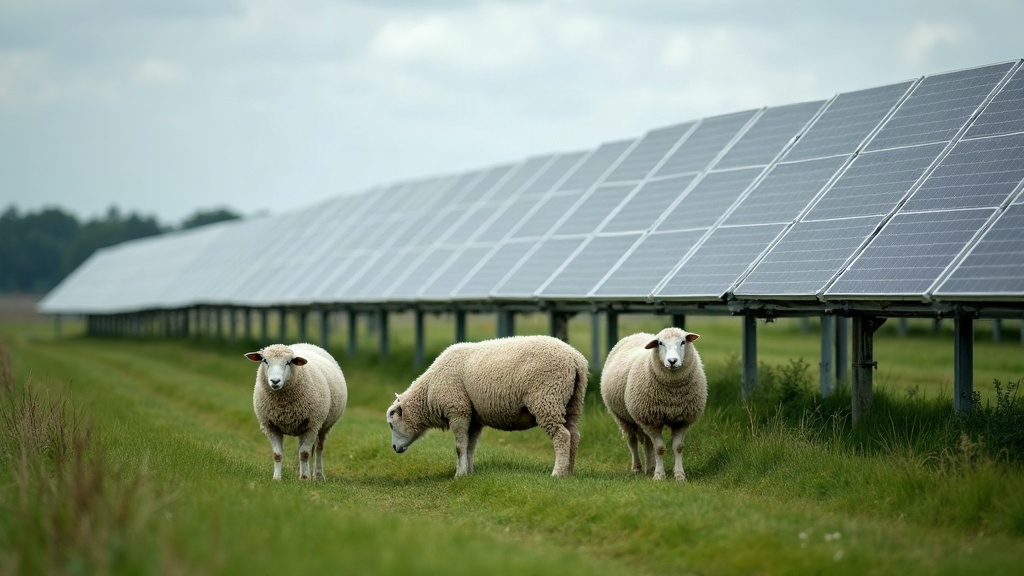
| Sheep grazing | 3–4 ft often works; some projects use less | Narrower spacing is fine since sheep need no machinery lane | Not a primary constraint | Sheep graze under and around low panels and even help manage vegetation growth. |
| Cattle or larger livestock grazing | 8–10 ft | Wide lanes for animal movement and equipment access | Pasture grass needs moderate light | Taller animals and the trucks or mowers used on cattle operations need real headroom. |
| Hay and forage crops | 6–8 ft | Wide enough for a baler or mower pass | 50%+ for healthy regrowth | Mechanical harvesting needs clear turning radius between rows. |
| Orchards, vineyards (overhead) | 12 ft or more | Set by existing tree or vine spacing | Varies widely by crop and canopy | Overhead arrays above established orchards need to clear tractors and sprayers without touching tree canopy. |
Notice the pattern: livestock-focused layouts trade low clearance for simplicity, while crop-focused layouts trade clearance and light for the ability to run farm equipment underneath. A design built for sheep won’t suit a hay operation, and a design built for row-crop vegetables won’t suit cattle. The mismatch between these constraints is the single most common reason a proposed agrivoltaics project gets scaled back or reworked before it’s installed.
The three layouts you’ll actually encounter
Most real-world projects fall into one of three physical arrangements, and the layout dictates which row of the table above applies.
Elevated fixed-tilt arrays
Panels sit on tall posts, tilted at a fixed angle, high enough for a specific crop or animal underneath. This is the most common agrivoltaics layout for vegetables and grazing. Height is the main design lever here, and it’s usually the most expensive layout per panel because taller steel structures cost more than standard racking.
Vertical bifacial arrays
Panels stand upright, usually facing east and west, between crop rows rather than above them. Because the panels are vertical, they shade the ground only briefly in early morning and late afternoon, which is why light transmission can run much higher than in overhead designs. This layout fits narrow-row crops like berries and some vegetables, and it also tends to generate electricity on a different daily curve than a south-facing array — more output in the morning and evening, less at midday.
Low-profile grazing arrays
Panels sit closer to the ground, often at the height used for conventional ground-mount solar, and sheep or small livestock graze among them. This layout produces the most electricity per acre of the three because panel density is closer to a standard solar farm, but it rules out cattle, tractors, or tall crops entirely.
What actually determines feasibility on a given piece of land
Beyond the crop-specific numbers, a handful of site conditions decide whether agrivoltaics is realistic at all.
- Soil and foundation type. Taller post-mounted arrays need deeper or more robust foundations than standard ground-mount racking, since the structure carries more wind load at height.
- Irrigation layout. Existing irrigation lines, pivots, or drainage need to be mapped against panel post locations before anything is built.
- Local wind and snow loads. These affect how tall and how closely spaced panels can safely be, and they’re engineering questions for a licensed structural or electrical professional, not something a general article can answer.
- Grid connection point. Rural parcels can be a long way from a suitable interconnection point, which affects project cost independent of the farming side. Our explainer on utility interconnection covers how that process generally works, though agricultural-scale projects typically go through a utility’s larger commercial interconnection process rather than its residential one.
Research groups including NREL, through a federally funded initiative that catalogs agrivoltaics projects and crop-yield studies, publish ongoing findings on how different crops respond to shade and row spacing in practice — worth a look if you want to see data rather than marketing claims, available through the InSPIRE project database.
Incentives and who to actually ask
Agrivoltaics can sometimes qualify for both agricultural and solar-related incentive programs, but which ones apply depends entirely on the country, state, and sometimes the specific utility territory. Some regions have dedicated dual-use solar incentives; others treat an agrivoltaics project as a standard commercial solar installation for incentive purposes, with no separate category at all. Programs also change or expire without much notice, so a figure that was accurate last year may not be this year.
The only reliable way to check current terms is through the official program administrator or your state’s energy office. The DSIRE database, maintained with U.S. Department of Energy support, is a reasonable starting point for seeing what programs exist in a given state, though it should be confirmed directly rather than treated as final through DSIRE. Our own pages on how solar tax credits and rebates work and finding legitimate incentive programs explain the general mechanics without quoting numbers that go stale. For grid-connected systems that plan to sell power back, it’s also worth understanding how net metering works, since agricultural-scale projects sometimes fall under different metering rules than a residential rooftop system.
None of this replaces a site visit. A proposal that looks good on paper can fail once someone measures actual sun angles, soil conditions, and equipment turning radius on your specific field. The table above is meant to help you walk into that conversation already knowing whether your crop or livestock type is even in the realistic range — and whether what’s being proposed matches it.
For the broader mechanics of how solar generation itself works before layering farming on top, our how clean energy works hub and the solar energy archive cover the underlying technology in more depth.
The Cleaner Energy publishes general information about clean energy technology, not financial, tax, legal or engineering advice. We are writers and editors, not installers, contractors or financial advisers. Incentives, rebates, utility rates and equipment costs vary by location and change over time — confirm current figures with the official program administrator, your utility, or a licensed local professional before making a purchase or installation decision.