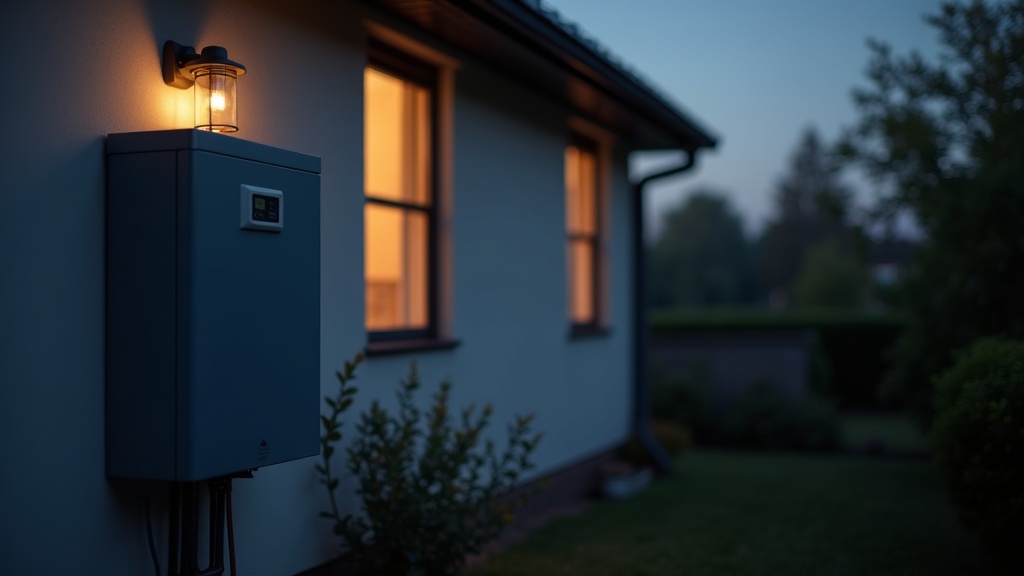
A home battery backup rarely runs an entire house the way a portable generator might. In most installations, it powers only the specific circuits wired into a dedicated backup subpanel — commonly refrigeration, some lighting, internet equipment, and a few outlets — for as long as its stored capacity and the connected loads allow. Whether that’s a few hours or a couple of days depends on the battery’s size, what’s plugged into those backed-up circuits, and whether solar panels are recharging it during the outage.
Understanding this distinction matters before money changes hands, because the marketing language around “whole-home backup” can mean very different things depending on the equipment, the installer’s design choices, and the size of the house.
Whole-house backup versus partial backup
There are two broad approaches to wiring a home battery into a house, and the difference determines what actually stays on.
- Whole-house backup: The battery (or battery bank) connects at the main panel, so every circuit in the home can draw from it, up to the battery’s power and energy limits. This requires enough stored capacity and enough continuous power output to handle the home’s real demand, particularly from large loads like central air conditioning, electric ranges, or well pumps.
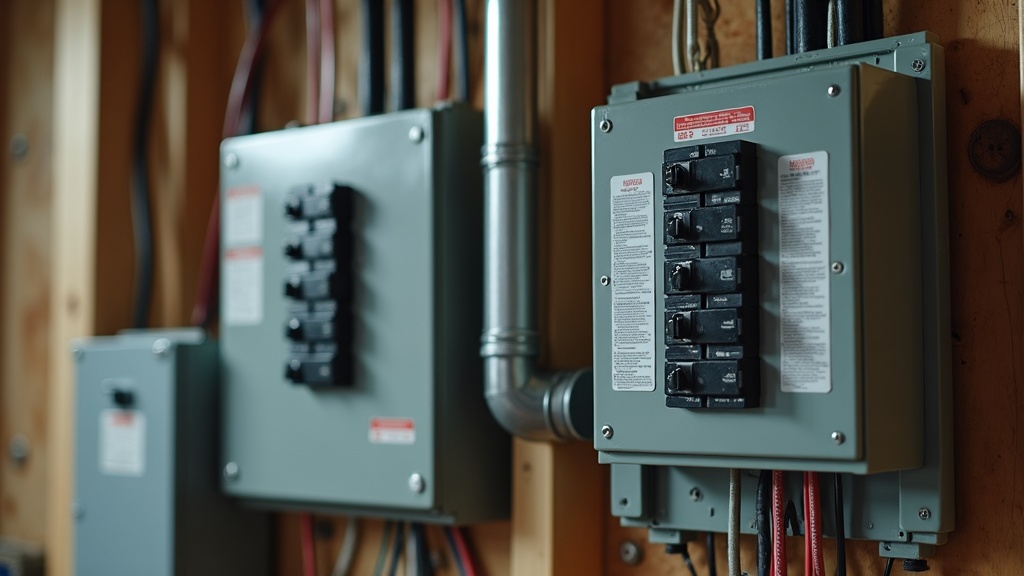
- Partial or subpanel backup: A separate, smaller panel is installed containing only the circuits the household chooses to protect. Everything on that subpanel gets power during an outage; everything else on the main panel does not, even though the house may look fully wired from the outside.
Many residential installations default to partial backup, not because it’s a lesser option, but because it lets a single battery or small battery stack cover meaningful essentials without needing the size and cost of equipment that could carry an entire home’s peak demand, including compressor-driven appliances. The tradeoff — fewer circuits protected versus a smaller, less expensive system — is exactly the kind of decision worth working through with whoever is designing the system, since it depends on the home’s actual electrical layout.
What decides how long the power lasts
Three things interact to determine runtime during an outage, and none of them are fixed numbers that apply to every household.
- Stored energy capacity. Measured in kilowatt-hours, this is the total amount of electricity the battery can hold and discharge before it’s empty. Larger capacity extends runtime but also raises equipment cost and physical footprint.
- Continuous power rating. Measured in kilowatts, this caps how much the battery can deliver at any single moment, regardless of how much energy is left in reserve. A battery can have plenty of stored energy but still trip or shut down if too many high-draw appliances start at once — which is a common reason air conditioning, electric water heating, or electric ranges are often left off backup circuits.
- Actual household load. Refrigerators cycle on and off, lighting draws relatively little, but anything that heats or cools using resistive elements or compressors pulls far more continuously. The same battery might run a refrigerator and some lighting for a day and a half, or drain in a few hours if it’s also asked to run space heaters or window air conditioners.
Because these three factors combine differently in every home, nobody can honestly give a single “this battery lasts X hours” answer without knowing the specific equipment and the specific loads connected to it. That’s a conversation for a licensed electrician or the system designer, based on the actual panel and appliance list — not a spec sheet number applied blindly.
Solar pairing changes the math — sometimes
A home battery paired with rooftop solar panels can recharge during daylight hours of a multi-day outage, which is a meaningfully different situation than a battery running on stored charge alone. Understanding how solar panels actually work helps explain why: production depends on sunlight hitting the array, so cloud cover, panel orientation, and the time of year all affect how much the battery gets topped up before dark.
It’s also worth knowing that most grid-tied solar systems, without a battery, shut off automatically during a utility outage as a safety measure protecting utility workers on the line — a home battery with the right inverter setup is usually what allows solar production to keep charging the battery, or power the house directly, while the grid itself is down. Whether a given solar-plus-storage system supports that kind of “islanded” operation is a design and equipment question specific to the installation, and it’s one worth asking directly before signing anything, alongside the broader questions worth raising with any solar installer before you sign.
Battery chemistry and how it ages
Not all home batteries are built the same way internally, and the chemistry affects how the battery behaves over repeated backup cycles, how it handles temperature extremes, and how its usable capacity changes over the years. The details are covered more fully in a look at lithium-ion versus other home battery chemistries, but the short version is that usable capacity in year one is not necessarily the same as usable capacity in year eight, which matters for anyone planning around long-term backup expectations rather than just the day the system is installed. For a broader technical walkthrough of how the whole system fits together — inverter, battery management system, and panel wiring — see how home battery storage actually works.
What typically ends up on a backup circuit
| Commonly backed up | Commonly left off backup |
|---|---|
| Refrigerator/freezer | Central air conditioning |
| Select lighting circuits | Electric range or oven |
| Internet router/modem | Electric clothes dryer |
| A few general-purpose outlets | Electric water heater |
| Well pump (in some designs) | Whole-house well pump (in others) |
| Garage door opener (sometimes) | Hot tub or pool pump |
This split isn’t a rule — it’s a description of typical choices, and the actual list is a household-by-household decision made with the electrician wiring the subpanel. Homes with high heating or cooling needs during outages, for example those in colder climates, sometimes weigh backup circuit choices alongside broader steps covered in weatherproofing a home for winter, since reducing heat loss lowers the load a battery would otherwise need to cover.
Incentives and costs are location-specific
Some utilities and state, provincial, or national programs offer incentives tied to battery storage, sometimes contingent on the battery being enrolled in a grid-support or demand-response program rather than used purely for private backup. These programs vary by location, change their terms and funding levels over time, and are not something a general information site can quote a figure for responsibly. The only reliable way to know what applies to a specific address is to check directly with the utility or the relevant program administrator, and government-run and non-profit clearinghouses that track these programs by region can be a useful starting point rather than relying on a number quoted by a sales representative. The same caution applies to cost estimates and any claim about how quickly a system might offset its own price — those depend on utility rate structures, incentive eligibility, and usage patterns specific to each household, which is why this kind of figure is best confirmed locally rather than assumed from a general article.
Questions worth asking before assuming coverage
- Is this a whole-house or subpanel backup design, and which specific circuits will be included?
- What is the continuous power rating, and can it start a compressor-driven appliance like a refrigerator or well pump?
- How does stored capacity translate to runtime for this household’s actual appliance mix, not a generic example?
- Does the system support solar recharging during an outage, or does it rely solely on stored charge?
- How does usable capacity change as the battery ages, and what warranty terms apply to that decline?
Households evaluating a battery alongside a first-time look at solar energy or already comparing battery models within energy storage and batteries coverage may also find it useful to have a professional walk through a home energy audit first, since a clearer picture of the home’s actual loads makes backup planning more realistic than guessing from appliance labels alone.
Frequently asked questions about home battery backup coverage
Will a home battery run my whole house during a power outage?
Only if it’s sized and wired for whole-house backup at the main panel, with enough continuous power rating to handle every appliance at once. Many residential systems instead back up a smaller subpanel of chosen circuits, which is worth clarifying before purchase.
How long does a home battery last during a blackout?
It depends on stored capacity, the battery’s power rating, and exactly which appliances are drawing from it — a refrigerator and lights behave very differently than air conditioning or an electric range. There’s no single runtime figure that applies across different homes and equipment.
Can my air conditioner run on battery backup?
Sometimes, but central air conditioning draws heavily enough that many backup designs leave it off the protected circuits unless the battery’s power rating and capacity were specifically sized to include it. This is a design decision to confirm with whoever wires the system.
Does solar keep charging the battery during an outage?
It can, if the inverter and battery are configured to operate independently of the grid, sometimes called islanding. Not every solar-plus-storage setup is built this way, so it’s worth asking directly whether the specific system supports recharging while the grid itself is down.
Are there rebates or incentives for home battery backup?
Some utilities and government programs offer incentives, often tied to enrolling the battery in a grid-support program, but availability and terms vary by location and change over time. Checking with the utility or the official program administrator is the only reliable way to confirm current terms.
The Cleaner Energy publishes general information about clean energy technology, not financial, tax, legal or engineering advice. We are writers and editors, not installers, contractors or financial advisers. Incentives, rebates, utility rates and equipment costs vary by location and change over time — confirm current figures with the official program administrator, your utility, or a licensed local professional before making a purchase or installation decision.