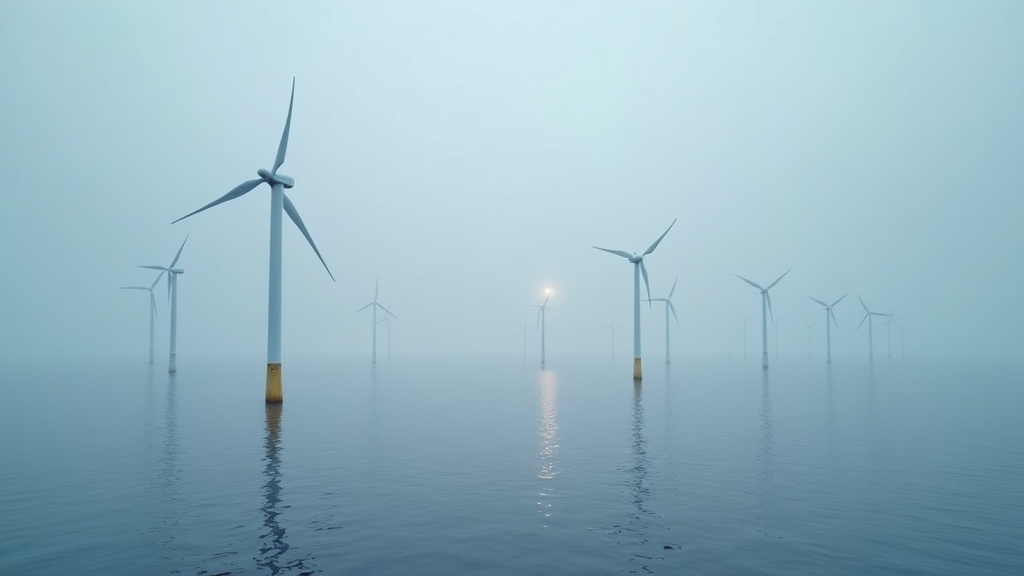
Offshore and onshore wind both convert moving air into electricity through the same basic mechanism, but they differ substantially in turbine size, the strength and consistency of the wind they capture, how the electricity gets to shore or to the grid, and the cost and permitting path each one follows. Offshore wind generally uses larger turbines in steadier wind over water, while onshore wind is cheaper to build and connect but works with more variable wind and more local land-use constraints. Which one matters to a given reader usually depends on whether they’re thinking about utility-scale power near their region or evaluating a community or regional project they’ve heard about.
The basic mechanics are the same, the environment isn’t
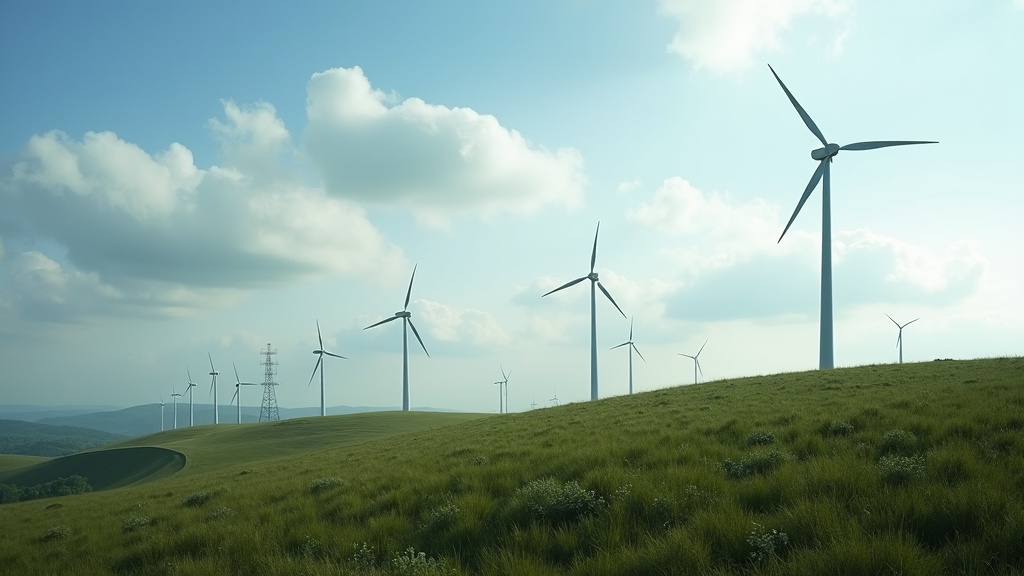
Both offshore and onshore turbines work the way any wind turbine does: blades catch moving air, spin a rotor, and drive a generator that produces electricity. If you want the underlying physics, how wind turbines generate electricity covers that ground in detail and applies to both settings equally. What changes is the environment the turbine sits in. Onshore turbines are built on land — ridgelines, plains, farmland, and other open areas with usable wind. Offshore turbines are installed in open water, either fixed to the seabed on foundations or, in some newer projects, mounted on floating platforms anchored to the bottom in water too deep for a fixed foundation.
That single difference in setting cascades into almost every other distinction between the two.
Turbine size and wind resource
Wind over open water tends to be stronger and more consistent than wind over land, where hills, buildings, and trees create friction and turbulence. Because offshore sites offer steadier wind and because transporting and installing very large components by ship is more practical than trucking them down rural roads, offshore turbines are typically built much larger than their onshore counterparts, with taller towers and longer blades. Larger rotors sweep a bigger area and can capture more energy per turbine, which is part of why a single offshore project can supply a large amount of capacity from a relatively small number of turbines.
Onshore turbines are sized to what can realistically be shipped over roads and erected without marine equipment, and they operate in wind that varies more by time of day, season, and terrain. That doesn’t make onshore wind unreliable — many onshore regions have strong, well-mapped wind resources — but the day-to-day output pattern tends to be choppier than what offshore sites typically see.
Getting the power to the grid
Onshore wind farms connect to the grid the way most power plants do: overhead or buried lines running to a substation. Offshore wind requires undersea cables running from each turbine to an offshore substation, then a longer cable run back to shore before it ever reaches a substation on land. Building and maintaining subsea cable is specialized, expensive work, and it’s one of the main reasons offshore projects carry higher upfront infrastructure costs even when the turbines themselves are more efficient per unit.
This is also where regional variation becomes unavoidable. Some coastlines have deep water close to shore, which limits where fixed-foundation turbines can go and pushes projects toward floating designs; others have wide, shallow continental shelves that support more conventional fixed foundations far from the coastline. Grid capacity on land near the coast also varies — some areas have transmission infrastructure ready to absorb a large new offshore project, others need substantial upgrades first.
Cost, permitting, and who’s involved
Onshore wind is generally the cheaper of the two to build, largely because it avoids marine construction, subsea cabling, and specialized offshore installation vessels. Permitting for onshore projects typically runs through local and state or provincial land-use processes, along with environmental review tied to the specific site — wildlife corridors, noise ordinances, and setback requirements from homes all factor in and differ by jurisdiction.
Offshore projects usually involve a separate leasing and permitting process specific to ocean or lakebed areas, often administered at a national or federal level alongside state or provincial coastal agencies, with environmental review covering marine life, shipping lanes, fishing grounds, and coastal views. Because more agencies and stakeholders are typically involved, offshore permitting timelines tend to run longer than onshore ones, though this varies by country and by project.
Neither the specific costs nor the specific incentive values for either type are fixed or universal — they depend on the country, the region, the utility or grid operator involved, and the specific project’s scale. Anyone evaluating a proposed project nearby, or a utility rate change tied to one, should check with the relevant grid operator, energy agency, or utility rather than relying on a general figure, since these numbers change over time and by location.
Visibility, noise, and community impact
Onshore turbines are visible from nearby homes and roads, and noise, shadow flicker, and the visual change to a landscape are common points raised by nearby residents during permitting. Offshore turbines, sited far enough from the coast, are usually less audible or not audible at all from shore, though they can still be visible on the horizon depending on distance and weather, which has been a point of public debate in some coastal communities.
Wildlife considerations differ too. Onshore projects are typically reviewed for impact on birds and bats along migratory paths. Offshore projects are reviewed for impact on marine mammals, fish, and seabirds, along with effects on commercial fishing and shipping routes. Both types of review are handled by environmental and wildlife agencies specific to each country, and the standards and required studies vary by jurisdiction.
Maintenance and access
Maintaining an onshore turbine generally means a technician driving to the site and using a service road or crane access already built for that purpose. Offshore maintenance requires boats or helicopters, favorable weather windows, and specialized safety protocols, since technicians are working over water on much larger equipment. This makes offshore maintenance logistically harder and more weather-dependent, which is part of why offshore projects are typically developed and operated by organizations with marine engineering experience rather than by residential-scale installers.
A side-by-side view
| Factor | Onshore wind | Offshore wind |
|---|---|---|
| Typical turbine size | Smaller, limited by road transport | Larger, shipped by sea |
| Wind consistency | More variable, terrain-dependent | Generally steadier over open water |
| Grid connection | Overhead or buried lines to substation | Subsea cable to shore, then substation |
| Permitting path | Local/state land-use and environmental review | Federal/national marine leasing plus coastal review |
| Maintenance access | Road and crane access | Boat or helicopter, weather-dependent |
| Community visibility | Visible and sometimes audible nearby | Usually distant, less or no audible impact onshore |
How this connects to home-scale decisions
Very few homeowners install their own wind turbine the way they might add rooftop solar, since usable wind speeds at a residential scale are far less common and site assessment is more specialized. Most people who benefit from either onshore or offshore wind are doing so indirectly, through the regional electricity mix their utility draws from. If you’re weighing renewable options that are more directly within a homeowner’s control, it’s worth comparing how onshore and offshore projects feed the grid against options covered in our solar energy coverage, including how community solar programs let households buy into a shared project instead of hosting equipment themselves, or how site choice affects performance in rooftop vs. ground-mount solar setups. The broader wind energy section on this site covers how these projects fit into regional power supply more generally.
For readers who want primary sources on project specifics, siting maps, or leasing areas, the U.S. Department of Energy’s Wind Energy Technologies Office and the National Renewable Energy Laboratory both publish technical resources on wind project data, and coastal projects in U.S. waters are documented through the Bureau of Ocean Energy Management.
Frequently asked questions about offshore vs onshore wind
Is offshore wind better than onshore wind?
Neither is universally “better” — offshore wind typically captures stronger, steadier wind with larger turbines but costs more to build and connect, while onshore wind is cheaper and faster to permit but works with more variable wind and closer proximity to communities.
Why are offshore wind turbines bigger than onshore ones?
Offshore turbines can be shipped by sea rather than trucked over roads, which removes the size limits onshore turbines face, and steadier ocean winds make larger rotors more worthwhile to install at a given site.
Does offshore wind cost more than onshore wind?
Offshore wind generally involves higher upfront costs due to marine foundations, subsea cabling, and specialized vessels, though actual project costs vary widely by country, water depth, and distance from shore — current figures should come from the project developer or energy agency involved.
Can homeowners install offshore or onshore wind turbines themselves?
Residential-scale wind is uncommon compared to rooftop solar because usable wind speeds at a home’s height and scale are rarer; most people benefit from onshore or offshore wind indirectly through their utility’s power mix rather than by hosting a turbine.
Which permitting process takes longer, offshore or onshore wind?
Offshore projects often take longer to permit because they typically involve federal or national marine leasing agencies alongside coastal and environmental review, while onshore projects generally go through local or state land-use processes, though timelines vary by jurisdiction and project.
Related reading
A Brief History of Wind Power.
The Cleaner Energy publishes general information about clean energy technology, not financial, tax, legal or engineering advice. We are writers and editors, not installers, contractors or financial advisers. Incentives, rebates, utility rates and equipment costs vary by location and change over time — confirm current figures with the official program administrator, your utility, or a licensed local professional before making a purchase or installation decision.