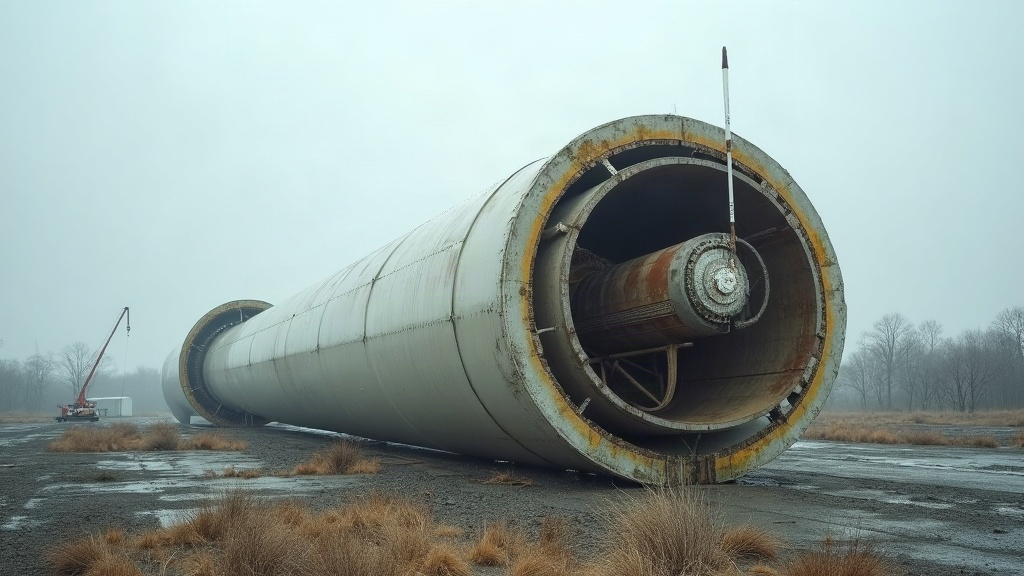
Most wind turbine blades reaching the end of their service life are cut into pieces and either shredded for use as fuel and raw material in cement kilns or sent to landfill, because their fiberglass-and-resin construction has historically been difficult to separate into reusable materials. Which of those two paths a given blade takes — and whether a third, better option exists — depends heavily on the resin used to build it. Blades made with traditional thermoset epoxy, which covers the vast majority of turbines installed before roughly 2022, cannot be chemically undone. Newer blades built with thermoplastic resin can be dissolved and their fiberglass recovered, which is a meaningfully different outcome.
That distinction is the part most explainers skip. It matters because it tells you, based on a turbine’s manufacture date and resin type, which disposal path actually applies to it.
Why blades are hard to deal with in the first place
A utility-scale blade is not a simple object. It is a long composite shell, often 40 to 80 meters depending on turbine class, built from layers of fiberglass or carbon fiber bonded with resin and reinforced with a lightweight core material. That structure is what lets it flex in high wind without failing. It is also exactly what makes it hard to recycle.
Thermoset resin is the problem. Once cured, it forms permanent chemical bonds. You cannot melt it back down the way you can melt a thermoplastic. Heat it enough and it decomposes instead of liquefying. For decades, that has left recyclers with blunt options: grind it up, burn it for its fuel value, or bury it.
Blades also arrive at end of life in bulk, on a predictable schedule. Service life for a turbine blade typically runs 20 to 25 years, and the current wave of early-generation turbines built in the 1990s and 2000s is now aging out at the same time newer installations are ramping up. You can read more about that broader turbine lifecycle on our wind energy hub, including how blade design connects to output over time via the capacity factor a turbine achieves across its operating life.
The decision rule: resin chemistry determines the path
Here is the part that actually matters for understanding a specific turbine’s fate. The question is not “can wind blades be recycled,” asked as if there’s one answer. The question is which resin that blade was built with.
| Resin type | Typical installation era | What happens at end of life |
|---|---|---|
| Thermoset epoxy | Before roughly 2022; still most new installs | Mechanically shredded on site, then co-processed as alternative fuel and raw material in cement kilns, or landfilled where no processor is available |
| Thermoplastic resin | Emerging from roughly 2022 onward, limited volume so far | Can be chemically dissolved; fiberglass fibers and resin recovered separately for reuse in new products |
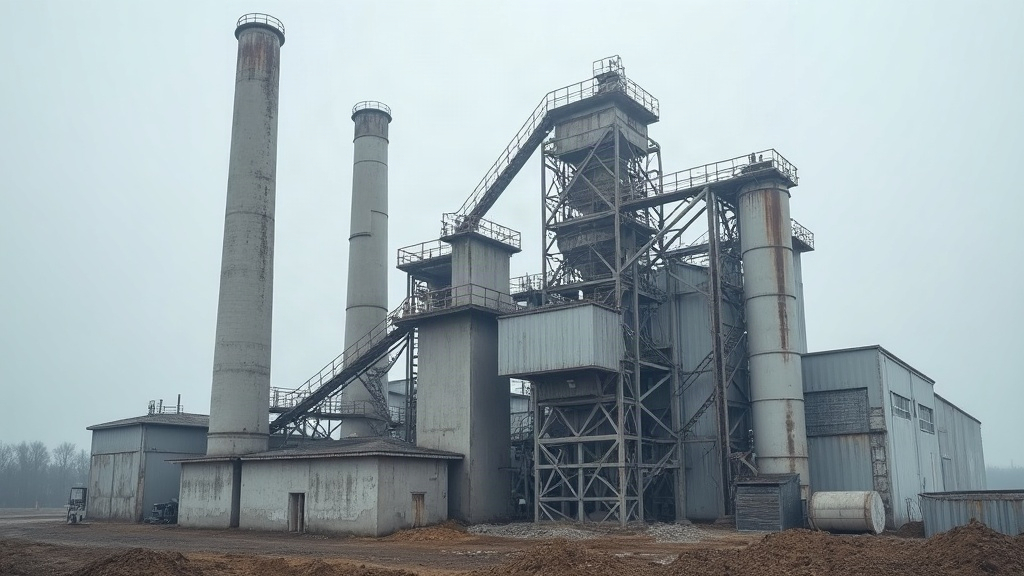
Thermoset epoxy blades make up nearly all turbines spinning today. For those, shredding and cement-kiln co-processing is the main alternative to landfill. The shredded composite has fuel value and also substitutes for raw minerals the kiln would otherwise need, so cement plants use it as both an energy source and a feedstock component. The U.S. Department of Energy has tracked this route as one of the more viable near-term options for legacy blades, given how few facilities can do true material recovery at scale (U.S. Department of Energy).
Thermoplastic blades are different. Vestas, one of the larger turbine manufacturers, introduced a design it calls CETEC that uses a thermoplastic resin system engineered to be chemically separable at end of life. In lab and pilot-scale processing, that resin can be dissolved with a mild acid solution, releasing the fiberglass fibers intact and leaving a resin that can itself be recovered and reused. The company has described the approach publicly as part of its sustainability program (Vestas). This is not yet how most blades are built, and adoption across the rest of the manufacturing industry is still early.
So the practical test for a reader looking at a specific turbine: find out when it was manufactured and by whom, then ask the manufacturer or operator which resin system the blades use. Before roughly 2022, assume thermoset epoxy and the shred-or-landfill path. From roughly 2022 onward, it depends on the specific model, and thermoplastic designs remain a minority of total installed capacity.
What mechanical shredding and co-processing actually involve
For thermoset blades, the process starts on site. Crews cut the blade into transportable sections, usually with diamond-wire saws, since standard blade lengths won’t fit on a highway trailer otherwise. Those sections go to a facility equipped with industrial shredders built for composite material.
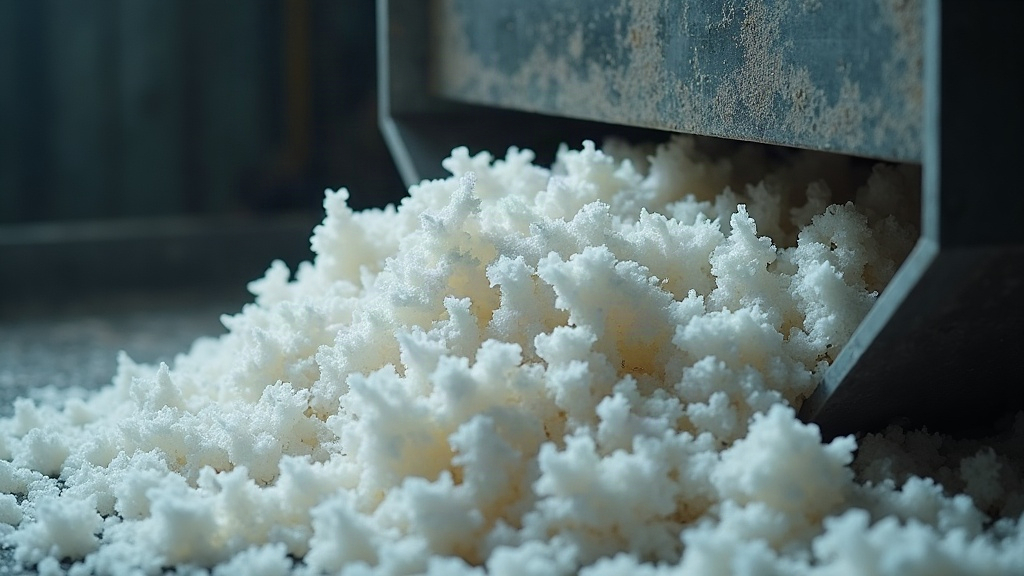
The shredded output is a mixed material: fiberglass, cured resin, and core material ground into fragments. It has no further structural use. What it has is combustion value and mineral content, which is why cement kilns are the main buyer. The National Renewable Energy Laboratory has researched this pathway along with others as the industry looks for scalable end-of-life options (NREL).
This is a form of downcycling, not recycling in the sense most people mean it. The fiberglass is not recovered as fiberglass. It is consumed as kiln feedstock and does not come back out as a reusable material. It is a legitimate alternative to landfill, but it is not the same outcome a thermoplastic blade can reach.
Landfill: still common, increasingly restricted
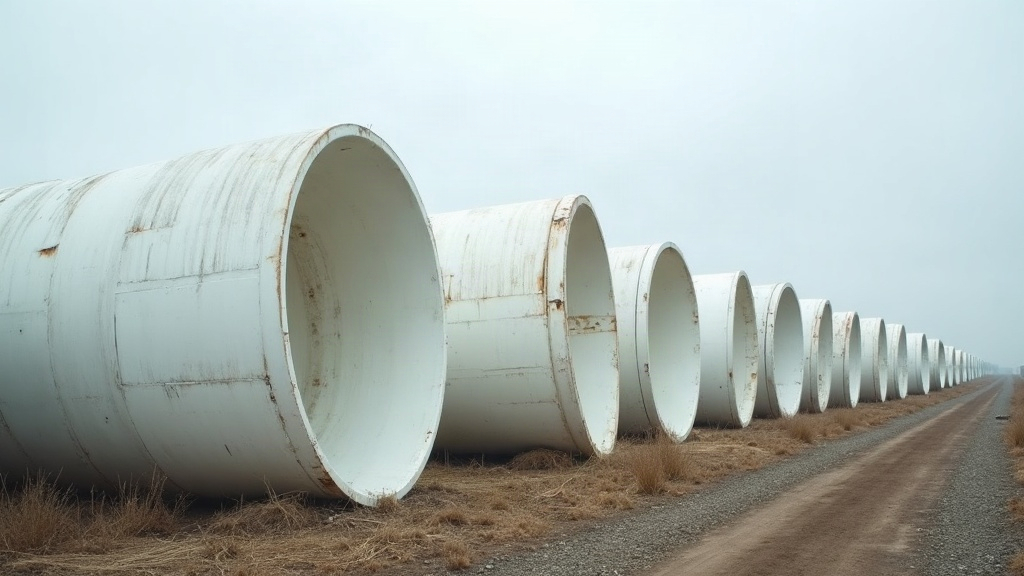
Where no shredding or co-processing facility is within reasonable hauling distance, landfill remains the default. Blade sections are large and bulky, so they take up disproportionate space relative to their weight, which has made some landfill operators and local governments reconsider accepting them.
Rules here vary a great deal by state and country, and they change. Some jurisdictions restrict or discourage landfilling of composite blade waste; others have no specific rule at all. The EPA’s general guidance on industrial and special waste provides a starting framework, but blade-specific landfill rules are set locally, not federally (U.S. Environmental Protection Agency). Anyone trying to understand what applies to a specific project should check with the state environmental agency or landfill operator directly, not assume a national standard exists.
Repurposing: real, but a small slice of total volume
You’ve likely seen the photos: a retired blade cut into sections and reused as a pedestrian bridge, a noise barrier, or playground equipment. These projects exist and are genuinely interesting engineering reuses of a structure that’s already built to handle bending loads. But they account for a small fraction of total blade volume reaching end of life. There are only so many bridges a region needs.
Repurposing works best as a complement to shredding and emerging chemical recycling, not a replacement for either. It diverts specific blades from landfill where a local project exists to take them, but it doesn’t scale to the volume coming off aging wind farms.
Why the resin shift is slow
If thermoplastic resin allows actual material recovery, a reasonable question is why it isn’t standard yet. A few reasons come up consistently in industry discussion.
- Thermoset epoxy has decades of performance data behind it; thermoplastic blade designs have far less operating history at scale.
- Switching resin systems means requalifying blade designs for structural certification, which takes time and testing.
- Existing manufacturing lines are built around thermoset processes, so retooling is a capital decision, not a quick swap.
- Chemical recycling facilities for recovered thermoplastic resin and fiberglass are not yet widespread, so even a dissolvable blade needs somewhere to go.
In other words, the technology exists, but the supply chain to use it at the scale of a wind farm fleet is still being built. That’s a normal pattern for new materials entering heavy industry — similar lag has shown up in how solar panel recycling infrastructure has developed more slowly than panel deployment itself.
What this means if you’re evaluating a turbine or a project
If you’re researching a specific wind project — whether out of general interest, proximity to a proposed farm, or curiosity about a utility’s power mix — the blade end-of-life question is answerable with a few concrete facts rather than guesswork:
- What is the manufacture or installation date of the turbines in question?
- Which manufacturer and blade model were used?
- Does the manufacturer specify thermoset or thermoplastic resin for that model?
- Is there a regional shredding or co-processing facility, or does the operator plan to landfill?
These are questions to put to the project operator, manufacturer, or state energy office — not something a general audience article can answer for every turbine, since the answer is specific to the equipment and its location. For background on how blades generate power in the first place, see our explainer on how wind turbines generate electricity, and for how the industry got to its current blade designs, our brief history of wind power covers the earlier generations of turbines now reaching retirement.
It’s also worth noting that onshore and offshore turbines face different logistics at end of life — offshore blades are larger on average and harder to transport once removed, which affects which disposal path is realistic. Our piece on offshore versus onshore wind goes into those structural differences in more detail.
The bottom line on blade disposal
There is no single answer to what happens to a wind turbine blade. The honest answer depends on when it was built and what resin holds it together. Thermoset epoxy blades, which is most of what’s spinning right now, get shredded and burned as kiln fuel or buried. Thermoplastic blades, still a small and growing share of new installations, can be chemically broken down and their materials recovered. If someone tells you blades universally end up in a landfill, or universally get recycled, neither claim reflects how the material actually behaves. The resin is the deciding factor, and it’s a fact you can usually ask for by name.
Frequently asked questions about wind turbine blade disposal
Can wind turbine blades be recycled at all?
Some can. Blades built with newer thermoplastic resin, like Vestas’ CETEC design, can be chemically dissolved and their fiberglass recovered. Most blades in service today use thermoset epoxy, which cannot be melted or dissolved, so they’re shredded for cement-kiln fuel or landfilled instead.
Why do old wind turbine blades go to landfills?
Thermoset epoxy resin, used in nearly all blades installed before roughly 2022, forms permanent chemical bonds that can’t be reversed. Where no shredding or cement-kiln co-processing facility is nearby, landfill becomes the only practical option, though some states restrict or discourage this.
What is cement kiln co-processing for wind blades?
It’s a process where shredded blade material is fed into a cement kiln as both fuel and raw mineral input, since the ground composite has combustion value and mineral content the kiln would otherwise source elsewhere. It’s a disposal alternative to landfill, not true material recycling.
The Cleaner Energy publishes general information about clean energy technology, not financial, tax, legal or engineering advice. We are writers and editors, not installers, contractors or financial advisers. Incentives, rebates, utility rates and equipment costs vary by location and change over time — confirm current figures with the official program administrator, your utility, or a licensed local professional before making a purchase or installation decision.