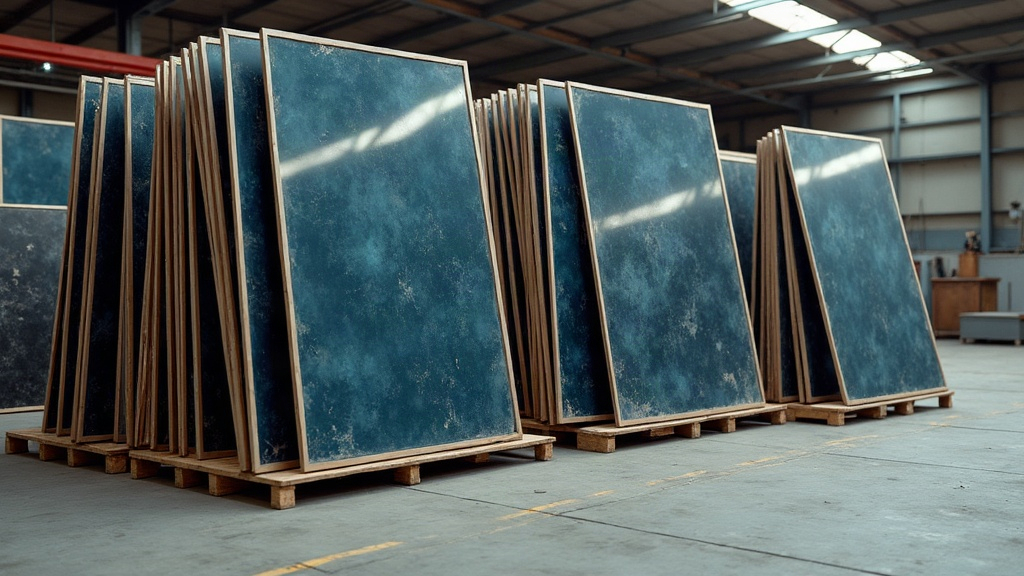
Solar panel recycling works in three stages. First, a machine strips off the aluminum frame and junction box. Second, heat or chemicals separate the glass from the layers bonded beneath it. Third, what’s left goes through acid leaching or smelting to pull out silicon and silver. Each stage recovers a different material, and the recovery rates are far from equal — that gap is the part most explanations skip.
Why panels are harder to recycle than they look
A solar panel is not really “glass with wires.” It’s a laminated sandwich. Glass, silicon cells, metal contacts, and a plastic sheet called EVA (ethylene-vinyl acetate) are fused together under heat and pressure during manufacturing. That lamination is what gives panels a working lifespan measured in decades. It’s also exactly what makes them stubborn to take apart again.
You can read more about that layered construction and how it holds up over time in our explainer on solar panel efficiency and degradation over time. For recycling, the practical problem is simple: nothing separates cleanly on its own. Every material has to be pried, melted, or dissolved out of a bonded whole.
The three-stage process, step by step
Most commercial recycling of silicon panels follows the same basic sequence, whether the facility is in Europe, the US, or Asia. The details of scale and technology vary by operator, but the order of operations doesn’t.
Stage 1: Mechanical disassembly
The panel arrives intact. Workers or machines remove the aluminum frame, the junction box, and the external wiring. These parts aren’t laminated to the glass, so they come off cleanly. This step is fast, cheap, and recovers almost everything it touches. Aluminum and the frame hardware go straight into standard metal recycling streams that already exist for other industries.
Stage 2: Delamination
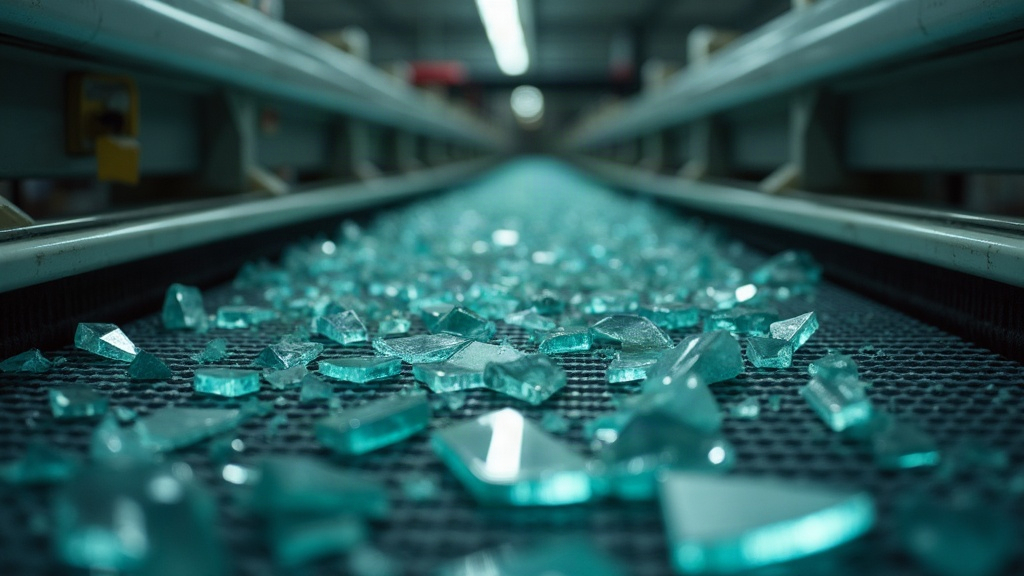
Now comes the harder part. The glass, the silicon cells, and the EVA layer are still fused together. Facilities separate them one of two ways: thermal treatment, which heats the laminate until the EVA breaks down or burns off, or chemical delamination, which dissolves the EVA using solvents. Thermal methods are more common at scale because they’re faster, but they can degrade the silicon cells in the process, which matters for what happens next. Chemical methods are gentler but slower and used less widely outside specialized recyclers.
Stage 3: Acid leaching or smelting
What’s left after delamination is a mix of silicon wafers, metal contacts, and trace silver. To recover the silicon and silver, facilities use acid leaching — dissolving the metals out with acid baths — or smelting, which uses high heat similar to standard metal refining. This is the most technically demanding and most expensive stage. It’s also the stage where a lot of material is currently lost, because the silver and copper in a panel exist in tiny amounts spread across a large surface, and pulling trace metal out cleanly costs more than the metal is worth in many operations today.
What each stage actually recovers
Recovery rates aren’t uniform, and that’s the detail worth sitting with before assuming “recyclable” means “fully recovered.” Figures reported by research groups such as the National Renewable Energy Laboratory and the International Energy Agency’s PVPS program consistently show the same pattern: the easy materials come out at high rates, and the valuable trace materials don’t.
| Material | Recovery stage | Typical recovery rate | Why |
|---|---|---|---|
| Aluminum frame | Mechanical disassembly | Around 95%+ | Bolted or clipped on, not laminated |
| Glass | Delamination | Around 90–95% | Largest component by weight, but often downcycled rather than reused as flat glass |
| Copper wiring | Mechanical / delamination | High, often 90%+ | Concentrated in wires, easy to separate |
| Silicon | Acid leaching / smelting | Highly variable, often well under half with mainstream methods | Thermal delamination can damage wafers before this stage even starts |
| Silver | Acid leaching / smelting | Roughly 15–20% with current mainstream methods | Present in trace amounts, spread thin across the cell, costly to isolate |
Those silicon and silver numbers are the honest headline here. Specialized recyclers using more careful, chemical-first processes report better recovery of silicon and silver than the mainstream mechanical-then-smelt approach most facilities use, but those processes are slower and not yet the industry default. This is an active area of research, not a solved problem, and the numbers reported by any given facility or study depend heavily on which delamination method they used upstream.
Why the glass and aluminum still matter most by weight
Glass makes up the majority of a panel’s total mass — often around three-quarters of it. So even though silver gets the attention, high recovery of glass and aluminum is what actually keeps most of the panel’s mass out of a landfill. The silver and silicon are the parts worth the most per gram, and they’re also the parts current mainstream recycling recovers the least of. Both things are true at once, and neither cancels the other out.
If you want the underlying physics of what’s inside a cell and why silver and silicon end up doing the electrical work, our piece on how a solar cell converts sunlight into electricity covers that separately from the recycling question.
Regional rules differ, and that changes what happens to your panels
Where you live affects whether recycling is required, encouraged, or simply optional. In the European Union, the WEEE Directive treats solar panels as electronic waste and places collection and recycling obligations on producers, which is part of why formal PV recycling infrastructure is more developed there. The United States has no single federal mandate of that kind. Instead, panel end-of-life is governed by a patchwork of state hazardous-waste rules, and the U.S. Environmental Protection Agency has separately clarified how certain intact, end-of-life PV modules can be managed under its universal waste regulations, which is a narrower and more technical framework than a full recycling mandate.
What this means practically: a panel removed from a roof in California may face different handling requirements than one removed in Texas or Ontario, and both differ from one removed in Germany. If recycling matters to you, the state or provincial environmental agency, or the utility overseeing decommissioning, is the source to check — not a general assumption that “recycling exists, so it will happen automatically.”
The National Renewable Energy Laboratory has published research modeling how PV recycling volumes and methods are likely to scale as the first large wave of panels installed in the 2000s and 2010s reaches end of life; their PV recycling research overview is a reasonable starting point if you want the technical detail behind the industry-wide numbers cited above.
What happens to panels that aren’t recycled
Not every retired panel goes to a recycler. Some are still functional but outdated, and get resold into secondary markets for lower-stakes uses. Some are sent to landfills where local rules allow it, particularly in regions without hazardous-waste restrictions on PV modules. Landfilling isn’t inherently catastrophic — panels are largely inert glass and metal — but it does forfeit the aluminum, copper, and glass that could otherwise be recovered at high rates, and it skips any chance at silver or silicon recovery entirely.
This is also where the timeline matters. Panels typically keep producing power for decades, with output declining gradually rather than stopping abruptly; our article on solar panel degradation over time covers that curve. Most panels reach true end-of-life through breakage, roof replacement, or a system upgrade — not through a sudden failure — which gives owners more choice in how the material is handled than a lot of marketing language implies.
What to ask if you’re removing panels
If you’re having panels removed for any reason, a few questions get you real answers instead of a general reassurance:
- Does the installer or removal contractor have a defined path to a recycler, or does removal end at storage or disposal?
- Are the panels being removed intact for resale, or damaged in a way that limits them to material recovery only?
- What does the state or provincial environmental agency require for hazardous-waste handling of PV modules in that specific location?
- Is there a take-back or manufacturer program tied to the original purchase, and is it still active?
These are the same kinds of questions worth raising before installation, not just after. Our guide on what to ask a solar installer before you sign covers end-of-life planning alongside the more common upfront questions. For the broader landscape of how solar systems fit into a home’s energy setup, the how clean energy works hub and the solar energy archive are useful starting points.
Frequently asked questions about solar panel recycling
How much of a solar panel can actually be recycled?
Most of a panel’s mass — the glass, aluminum frame, and copper wiring — can be recovered at high rates, often above 90%. Silicon and silver recovery is much lower with current mainstream methods, so “recyclable” doesn’t mean every material comes back out at the same rate.
Why is silver recovery from solar panels so low?
Silver exists in a panel only as a thin trace layer spread across the cell surface. Extracting it cleanly requires acid leaching or smelting, and with mainstream processes today, only a portion is typically recovered because isolating such small amounts costs more than simpler bulk-material recovery.
Is it illegal to throw away solar panels?
It depends entirely on location. Some regions classify end-of-life panels as hazardous or regulated waste with specific handling rules; others allow standard disposal. Check your state, provincial, or national environmental agency for the rule that actually applies where the panels are being removed.
Do solar panel manufacturers take panels back for recycling?
Some manufacturers and industry associations run take-back or recycling programs, but participation and availability vary by company and region, and programs can change. Ask the original manufacturer or installer directly whether a program exists and is currently active before assuming one does.
How long do solar panels last before they need to be recycled?
Panels typically continue producing power for several decades, with output declining gradually rather than stopping suddenly. Most reach end-of-life through breakage, roof work, or a system upgrade rather than outright failure — see our piece on efficiency and degradation for how that decline typically looks over time.
Does solar panel recycling cost money, or does someone pay you for old panels?
It depends on the material recovered and local demand. Aluminum and copper can have resale value that offsets some handling costs, while glass and trace-metal recovery are often net costs to the recycler. Whether you pay, break even, or get anything back depends on the facility and your location.
The Cleaner Energy publishes general information about clean energy technology, not financial, tax, legal or engineering advice. We are writers and editors, not installers, contractors or financial advisers. Incentives, rebates, utility rates and equipment costs vary by location and change over time — confirm current figures with the official program administrator, your utility, or a licensed local professional before making a purchase or installation decision.