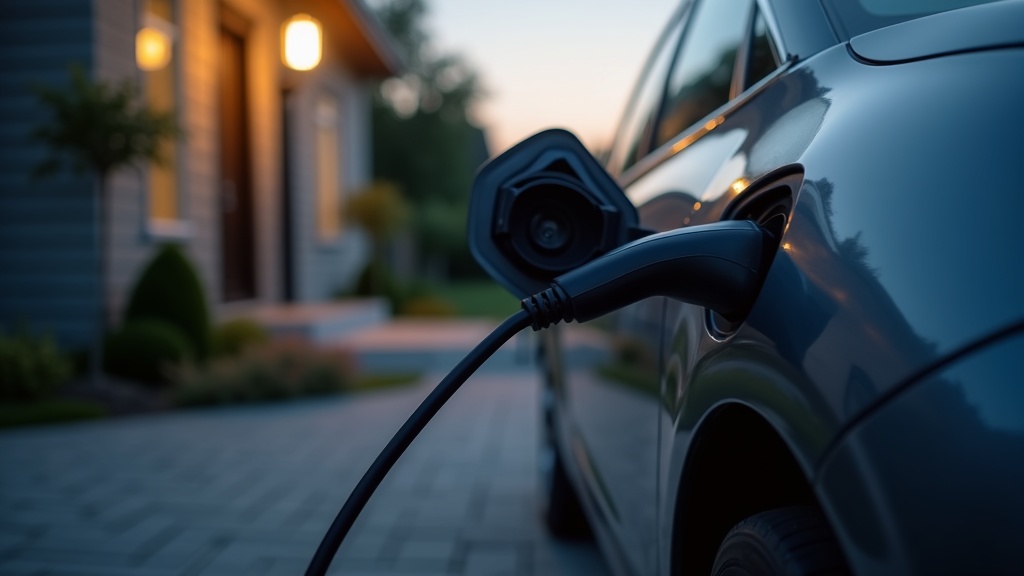
An EV (electric vehicle) runs only on a battery and electric motor, with no gasoline engine at all. A conventional hybrid uses a gasoline engine paired with a small battery that recharges itself as you drive, and it never plugs in. A plug-in hybrid (PHEV) sits between the two: it has a larger battery you charge from an outlet or charger, giving it a limited all-electric range, plus a gasoline engine that takes over once that battery is depleted. The differences that matter most to a buyer are how far each can go on electricity alone, whether it needs a charger at all, and how much of the driving experience depends on gasoline.
The three drivetrains, mechanically
All three vehicle types use batteries and electric motors somewhere in the drivetrain, but the size of the battery and the source of its energy change everything else about how the car behaves.
Battery electric vehicles (EVs)
A battery electric vehicle has no engine, no exhaust, and no fuel tank. It stores energy in a large battery pack, typically far bigger than what a hybrid or plug-in hybrid carries, and that pack is the sole source of propulsion. Every mile comes from grid electricity, whether that electricity was generated by a coal plant, a nuclear plant, or a home solar array. Charging is not optional for an EV in the way it is for a plug-in hybrid — if the battery is empty, the car is not going anywhere until it charges. Understanding how charging speed, connector types, and network reliability work is worth reading about separately, since it shapes daily life with an EV more than almost any other factor.
Conventional (non-plug-in) hybrids
A standard hybrid, the kind that has been sold for over two decades, pairs a gasoline engine with a small battery and electric motor. That battery is charged entirely by the engine and by regenerative braking — capturing energy that would otherwise be lost when slowing down. You never plug it in, and in most cases there is nowhere to plug it in even if you wanted to. The electric motor assists the engine, smooths out stop-and-go driving, and lets the engine shut off briefly at stops or low speeds, which is where the fuel-efficiency gain comes from. But the car is always, fundamentally, a gasoline vehicle with electric assistance.
Plug-in hybrids (PHEVs)
A plug-in hybrid carries a battery large enough to power the car on electricity alone for a limited distance, often enough for a typical commute, before the gasoline engine takes over for longer trips. Unlike a conventional hybrid, a PHEV can be charged from a wall outlet or a home charger, and doing so is how you actually access its electric-only range. Skip charging entirely and a PHEV still runs, just as a conventional hybrid does, but you lose the reason many people buy one in the first place. The gasoline engine is there as a backup and for sustained highway driving, not as the main event.

What actually differs day to day
The mechanical distinctions translate into real differences in ownership that are worth separating from marketing language.
Charging and fueling
An EV depends entirely on charging infrastructure — at home, at work, or on public networks — and running out of charge means being stranded until you reach a charger. A conventional hybrid never needs to be plugged in and is fueled exactly like a gasoline car. A plug-in hybrid can be charged at home or on a public network for its electric range, but it also has a gas tank as a fallback, so a missed charge is an inconvenience rather than a problem. Anyone considering a PHEV or EV should look into what a home charger installation actually involves, including panel capacity and whether Level 1 or Level 2 charging suits their driving pattern, a topic covered in more detail in a look at EV charging levels from L1 through DC fast charging.
Range and battery size
EV batteries are the largest of the three, giving the longest electric range but also making the vehicle more sensitive to how range holds up over years of use and cold weather. Plug-in hybrid batteries are much smaller, sized for a defined electric range rather than long-distance travel, and conventional hybrid batteries are smaller still, sized only to assist the engine rather than to drive the car unaided for any meaningful distance. Battery behavior over time — degradation, temperature sensitivity, and how manufacturers define range — differs by chemistry and by vehicle, and it’s a subject worth understanding in more depth, particularly for anyone comparing used EVs or PHEVs where battery health is not always obvious at a glance.
Maintenance profile
EVs have no engine oil, no exhaust system, no spark plugs, and fewer moving parts overall, though they still need tires, brakes, cabin filters, and eventually battery-related service. Conventional hybrids need the same maintenance as a gasoline car, plus attention to the hybrid battery and electric components, though that battery is generally not something an owner interacts with directly. Plug-in hybrids carry the maintenance needs of both a gasoline engine and a battery-electric system, since they have both, and some owners find that if the gasoline engine is used rarely, its fluids and components still age and need scheduled attention regardless of mileage.
Purchase price and incentives
EVs and plug-in hybrids are commonly eligible for various government incentive programs, and some utilities offer separate incentives tied to charging equipment or off-peak electricity rates. Conventional hybrids are less consistently covered by these programs since they don’t plug in. The specifics — what qualifies, how much is available, and whether a given vehicle or household meets income or price caps — change frequently and differ by country, state or province, and sometimes by utility territory. Rather than relying on a number that may already be outdated, it’s worth checking directly with the official program administrator, such as a national energy department, or the relevant tax authority, since incentive rules are revised on their own schedule and eligibility can shift year to year.
How they compare at a glance
| Feature | EV | Hybrid | Plug-in Hybrid |
|---|---|---|---|
| Gasoline engine | None | Yes | Yes |
| Plugs in to charge | Always required | Never | Optional but needed for electric range |
| Electric-only range | Full range | Very short, low speed only | Limited, defined range |
| Runs with empty battery | No | Yes, on gasoline | Yes, on gasoline |
| Home charger needed | Effectively yes for convenience | No | Helpful, not mandatory |
Questions worth asking before choosing
The right category of vehicle depends heavily on driving patterns, access to charging, and climate, not on which technology sounds most advanced. Someone who can charge overnight at home and rarely drives long distances experiences an EV very differently from someone who relies entirely on public charging networks, which is why it helps to understand how public EV charging networks actually function before assuming charging away from home will be as simple as charging at a driveway outlet. A plug-in hybrid can suit someone who wants electric-only commuting but also takes long road trips without reliable charging access along the route. A conventional hybrid may suit someone without any charging access at all, such as an apartment dweller with no dedicated parking, since it delivers a fuel-efficiency benefit without requiring any change to daily routine.
Climate and battery longevity are also relevant considerations, since cold weather affects electric range and charging speed across all plug-in vehicle types, and battery degradation patterns differ by chemistry and by how a vehicle is charged and used over time. None of these factors have a single universal answer — they depend on the specific vehicle, the climate, and how the car is actually driven, which is why comparing spec sheets in isolation tends to miss the practical picture.
For households already weighing a home charger alongside other electrification projects, it can help to think about the whole picture of home energy use together, from insulation and heating systems to how a charger interacts with existing electrical capacity, rather than treating the vehicle decision in isolation. Broader background on electric vehicles as a category is available in the site’s electric vehicles section, and related home energy topics are covered in the home energy efficiency section.
Frequently asked questions about EV vs hybrid vs plug-in hybrid
Is a plug-in hybrid better than a regular hybrid?
Neither is universally better; a plug-in hybrid offers electric-only range if you can charge regularly, while a regular hybrid needs no charging infrastructure at all. The better fit depends on daily driving distance, access to charging, and how much gasoline use you’re trying to reduce.
Can you drive a plug-in hybrid without ever charging it?
Yes, a plug-in hybrid will run on its gasoline engine like a conventional hybrid if never charged, but doing so means missing the electric-only range that is the main reason many buyers choose a PHEV over a regular hybrid in the first place.
Do EVs need a home charger to be practical?
Not strictly, but most EV owners find home charging significantly more convenient than relying solely on public networks, especially for daily driving. Whether a home charger installation is feasible depends on electrical panel capacity, parking situation, and local electrician availability.
Which lasts longer, an EV battery or a hybrid battery?
Battery longevity depends on chemistry, usage patterns, temperature exposure, and how the manufacturer manages charging, not simply on vehicle type. Both EV and hybrid batteries are generally designed with long service life in mind, but degradation rates vary by specific vehicle and climate.
Are hybrids or EVs cheaper to maintain?
EVs generally have fewer moving parts requiring routine service since there’s no engine oil or exhaust system, while hybrids and plug-in hybrids maintain both gasoline-engine and electric-system components. Actual maintenance costs vary by manufacturer, vehicle age, and local service pricing.
Related reading
Home EV Charger Installation Basics, EV Range and Battery Degradation Explained.
The Cleaner Energy publishes general information about clean energy technology, not financial, tax, legal or engineering advice. We are writers and editors, not installers, contractors or financial advisers. Incentives, rebates, utility rates and equipment costs vary by location and change over time — confirm current figures with the official program administrator, your utility, or a licensed local professional before making a purchase or installation decision.