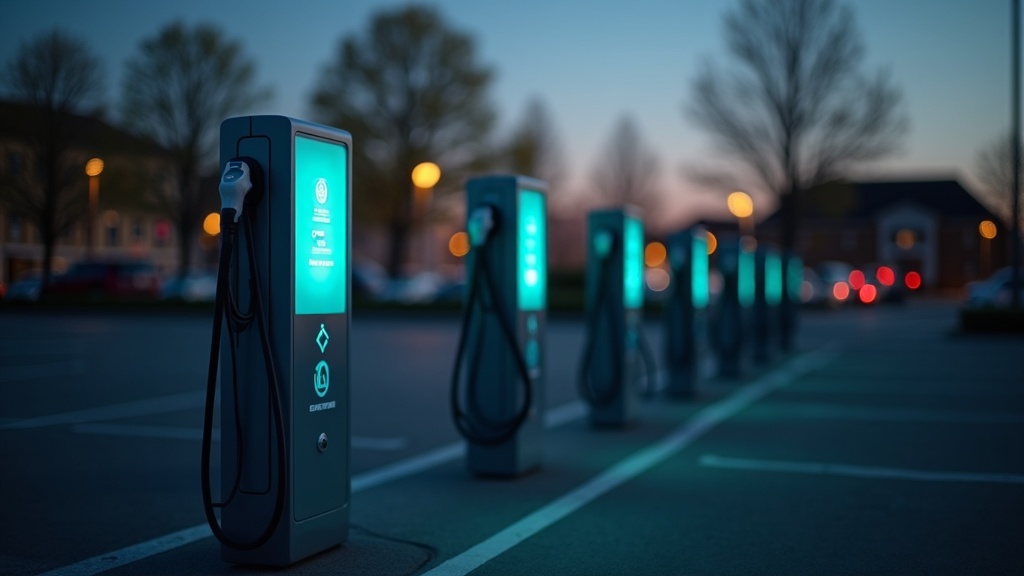
Public EV charging networks work by combining physical hardware owned by a charging company or site host, a payment and authentication system tied to an app or card, and a back-end network that manages pricing, availability data, and power distribution. When you plug in, your car and the charger negotiate power delivery while the network verifies payment and logs the session. The experience varies a lot by network, region, and connector type, which is why two chargers in the same parking lot can behave completely differently.
The three layers behind every charging session
It helps to think of public charging as three separate systems stacked together. The first is the hardware itself — the charger, its cables, and the connector standard it uses. The second is the software layer: the app, RFID card, or credit card reader that identifies you and authorizes the session. The third is the back-end network operations center, which sets pricing, monitors uptime, and often controls how much power a station can draw from the grid at any given moment.
These layers are frequently run by different companies. A shopping center might host chargers owned by one network, installed by a separate contractor, and connected to software from yet another vendor. When something goes wrong — a charger that won’t start, an app that won’t load — it’s often because one of these layers failed, not necessarily the charger’s electronics.
Connector types and charging levels still matter
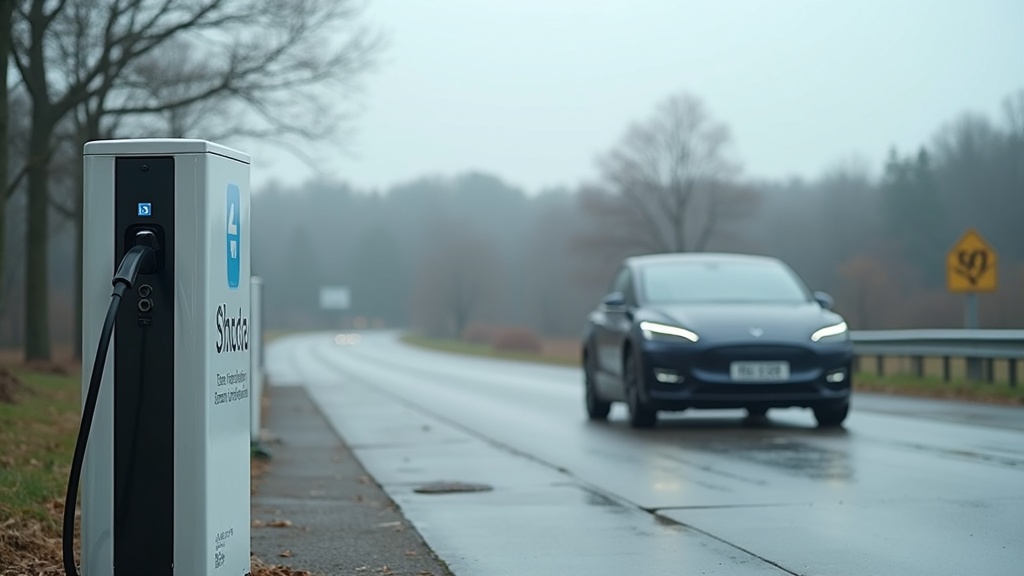
Not every public charger uses the same plug, and not every plug delivers power at the same speed. Broadly, public charging falls into the same tiers used at home, just scaled up — a distinction covered in more detail in our piece on EV charging levels explained. Level 2 stations, common at destinations like grocery stores or workplaces, deliver power over several hours. DC fast chargers, usually found along travel corridors, push much higher power and can add significant range in well under an hour, though actual speed depends on the vehicle, the state of the battery, and ambient temperature.
Connector standards also differ by region and, in North America, have been in flux as automakers shift toward a shared standard. Some networks operate multiple connector types at a single site to serve a wider range of vehicles, while others are tied to one standard. Because this landscape keeps evolving, it’s worth checking a vehicle’s charging port compatibility and any adapter requirements directly with the automaker or the charging network before relying on a specific station for a trip.
How pricing actually gets set
Public charging pricing is set by the network operator or, in some cases, the site host, and it is not standardized the way a gas station’s per-gallon price roughly is. Common pricing structures include per-kilowatt-hour billing, per-minute billing, flat session fees, or a combination with idle fees charged after a car finishes charging but stays plugged in. Some jurisdictions regulate whether stations can bill by the kilowatt-hour versus by time, which is one reason pricing structures differ from state to state or country to country.
Membership tiers, app-based subscriptions, and one-time guest pricing can all appear at the same station, often with different rates. Because these figures are set by individual companies and change without much notice, the only reliable way to know what a session will cost is to check the network’s app or the posted rate at the station itself before starting a charge, rather than assuming a rate from a previous visit still applies.
Authentication: how the charger knows it’s you
Most networks use one of a few authentication methods: a smartphone app that starts the session remotely, an RFID card or key fob tapped against a reader, a contactless credit card reader built into newer stations, or plug-and-charge technology that authenticates automatically through the vehicle itself once it’s plugged in. Older or smaller networks sometimes rely on phone-based customer service lines as a backup when the app or reader fails.
This is also where interoperability gaps show up. A charging card from one network may not work at another network’s stations, and apps sometimes require an account to be created and funded in advance. Roaming agreements between networks have reduced this friction in some regions, letting one app or card work across multiple operators’ hardware, but coverage of these agreements is inconsistent and worth checking for the specific networks along a planned route.
Power sharing and why speeds can drop
A charging station’s advertised maximum speed is not always what a given car receives. Many DC fast charging sites share power across multiple stalls from a shared electrical infrastructure, meaning that if several vehicles charge simultaneously, each may receive less power than if it were charging alone. The vehicle’s own onboard charging system and battery management also throttle speed, particularly as the battery fills up or if it’s very cold or very hot outside — a topic connected to how batteries behave generally, discussed further in our article on EV range and battery degradation.
Utility infrastructure at the site itself is another limiting factor. A station built where the local grid connection has limited capacity may be capped at a lower power output than the hardware is technically capable of, regardless of demand. This is part of why fast-charging buildout is uneven — it depends on what the local utility can supply at that location and what upgrades, if any, were part of the original installation.
Network reliability and what affects it
Charger uptime — whether a station is actually functional when you arrive — varies significantly by network, region, and how well a site is maintained. Real-time status shown in an app is not always accurate, since some networks rely on periodic check-ins from the hardware rather than continuous monitoring. Weather exposure, vandalism, and the complexity of card readers and screens are all practical maintenance factors that differ between a simple Level 2 unit and a more complex DC fast charger.
Government agencies and independent researchers in some regions publish data on charger reliability and coverage gaps, which can be a more grounded way to evaluate a network than marketing claims. For drivers who primarily charge overnight at home and use public networks only for longer trips, the reliability question matters less day-to-day — a distinction worth weighing against the basics covered in our guide to home EV charger installation basics.
Where public charging fits alongside home and workplace charging
For most EV owners with access to home charging, public networks function as a supplement for travel, errands away from home, or situations where home charging isn’t available — not as the primary charging method. This is a meaningful distinction because public charging is generally priced higher than charging at home, reflecting the cost of the hardware, real estate, network operations, and often a margin for the site host. Workplace charging, community charging hubs, and charging tied to community solar arrangements add further variation, since pricing and access rules at these sites are often set locally rather than by a national network.
Broader questions about home electrical capacity, efficiency, and how EV charging interacts with a household’s overall energy use are covered across our electric vehicles and home energy efficiency sections, which is a useful starting point for anyone comparing home versus public charging as part of a bigger household energy picture.
Incentives and public charging infrastructure
In many regions, public charging buildout has been supported by government grants, utility programs, or manufacturer incentive schemes aimed at expanding coverage, particularly along travel corridors and in underserved areas. These programs affect where new stations appear and sometimes influence pricing or network requirements, but the specific terms, funding amounts, and eligibility rules change over time and differ by country, state, or utility territory. Anyone trying to understand why a particular network exists in a particular location, or whether new stations are planned nearby, should check with the relevant transportation agency, utility, or program administrator rather than relying on network marketing materials for that context.
Frequently asked questions about public EV charging networks
Do I need a different app for every charging network?
Often yes, though roaming agreements between some networks let one app or card work across multiple operators. Coverage of these agreements varies by region and network, so it’s worth checking which apps or cards work along a specific planned route before relying on a single account.
Why did my charging speed drop partway through a session?
Charging speed is throttled by the vehicle’s battery management system as the battery fills, by temperature, and sometimes by power sharing with other vehicles at the same station. This is normal behavior built into most EV battery systems, not necessarily a sign of a malfunctioning charger.
Why do public charging prices vary so much between stations?
Pricing is set independently by each network or site host and can be billed per kilowatt-hour, per minute, or as a flat fee, depending partly on what local regulations allow. There’s no single standard rate, so checking the app or posted price before charging is the only reliable way to know the cost.
What happens if a public charger doesn’t work when I arrive?
Most networks list a customer support number on the unit or in the app for reporting outages, and some apps show real-time status, though it isn’t always accurate. Many drivers check for a nearby alternate station in the app as a backup before relying on a single location, especially on longer trips.
Is public charging always more expensive than charging at home?
Generally, yes, since public pricing reflects hardware, site, and network operating costs, while home charging uses residential electricity rates. Exact differences depend on local utility rates and network pricing, both of which vary by location, so there’s no fixed figure that applies everywhere.
The Cleaner Energy publishes general information about clean energy technology, not financial, tax, legal or engineering advice. We are writers and editors, not installers, contractors or financial advisers. Incentives, rebates, utility rates and equipment costs vary by location and change over time — confirm current figures with the official program administrator, your utility, or a licensed local professional before making a purchase or installation decision.