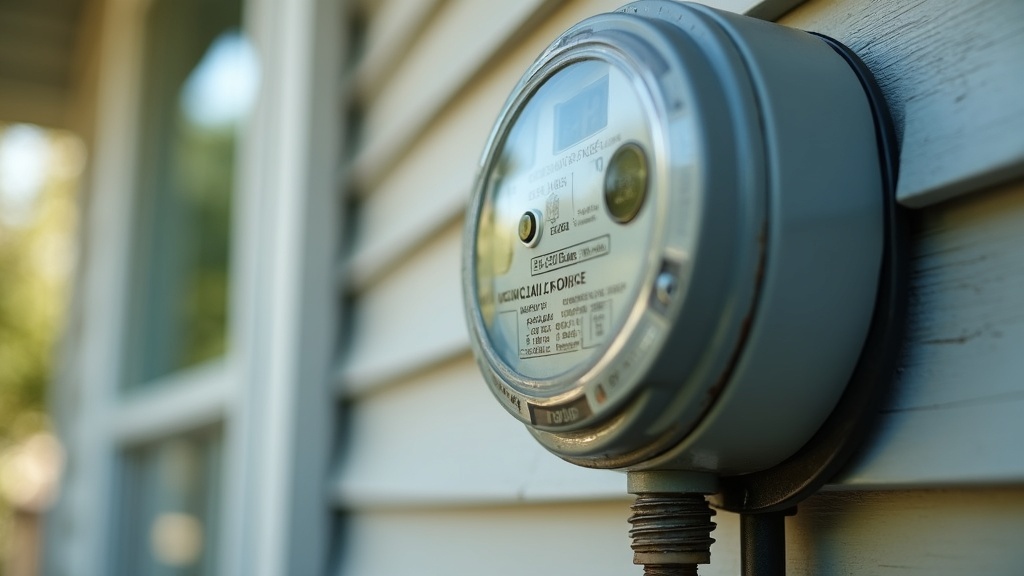
A home energy bill is made up of two broad categories: charges for the energy you actually used, and charges for the infrastructure and services that deliver it to you. The exact line items, rate structures, and fees vary by utility and by state, province, or country, so the same household usage can produce very different bills depending on where you live. Understanding the categories helps you see what you can influence and what you can’t.
The basic anatomy of a bill
Most residential electricity and gas bills separate charges into a few recurring groups, even though the labels differ by provider:
- Fixed or customer charges — a flat monthly fee for being connected to the grid, regardless of how much energy you use.
- Volumetric or usage charges — the cost tied directly to how many kilowatt-hours (kWh) of electricity or therms/cubic meters of gas you consumed.
- Delivery or distribution charges — fees that cover the wires, transformers, meters, and maintenance that get energy to your home, separate from the cost of the energy itself.
- Taxes and regulatory fees — set by local, state, or national authorities and unrelated to your usage pattern.
- Riders or adjustment charges — items that fund specific programs, such as energy efficiency initiatives or infrastructure upgrades, which some utilities itemize separately.
Not every utility uses all of these categories, and the terminology on your bill may not match this list exactly. If a charge is unclear, the utility’s customer service line or website is the most reliable place to ask what it covers and why it changed.

Fixed charges versus variable usage
The fixed charge stays the same whether you used almost no energy that month or ran the air conditioner constantly. It exists partly to cover the utility’s cost of maintaining the connection to your property. The usage charge, by contrast, scales with your consumption and is usually the portion a household has the most ability to change through behavior, equipment choices, or generating some of its own electricity.
Some utilities also apply tiered rates, where the price per kWh increases once usage crosses a certain threshold in a billing period, or time-of-use rates, where the price depends on the hour of day and day of week you use electricity — typically higher during peak demand periods and lower overnight or on weekends. Whether your utility uses flat, tiered, or time-of-use pricing is something only your utility’s rate schedule will tell you, since it varies by territory and sometimes by the specific plan you’re enrolled in.
Reading your usage data
Most bills show current usage alongside a comparison to the prior month or the same month a year earlier. This context matters more than the raw number, because a single month’s kWh figure doesn’t tell you much on its own — weather, occupancy, and equipment changes all shift it. If your utility offers an online portal or app, it often provides more granular data, sometimes down to the hour, which can make it easier to see when in the day your consumption spikes.
A rising bill doesn’t always mean a rate increase. It can reflect a rate change, a shift in weather that increased heating or cooling demand, a change in occupancy, or a piece of equipment running less efficiently than before. Distinguishing between these causes usually starts with comparing usage (kWh) rather than just the dollar total, since usage strips out the effect of a rate adjustment.
Where solar, batteries, and EVs show up on the bill
If a household has rooftop solar, a home battery, or an electric vehicle, the bill can look noticeably different from a standard one, and the differences depend heavily on local rules.
Homes with solar panels connected to the grid are typically billed under a net metering or similar arrangement, where excess electricity sent back to the grid offsets some of what the household draws at other times. The mechanics of how that credit is calculated, and whether it’s a straight kWh-for-kWh swap or something more complex, differ by utility and by state or provincial policy — our explainer on how net metering works walks through the general mechanics without assuming one jurisdiction’s rules apply everywhere.
A home battery paired with solar can change when energy is drawn from the grid versus stored power, which matters most under time-of-use rates. Households charging an electric vehicle at home will typically see a usage increase concentrated in certain hours, and some utilities offer a separate metered rate or schedule specifically for EV charging — a detail worth asking about before assuming a standard rate applies, and something covered in general terms in our piece on home EV charger installation basics.
What efficiency changes affect on the bill
Because the usage portion of a bill is the part most within a household’s control, efficiency changes tend to show up there first. Insulation, air sealing, thermostat scheduling, and appliance choices all affect the kWh or therms consumed, though weather variation from month to month can make the effect harder to isolate on a single bill. A structured look at where a home is losing energy — sometimes called a home energy audit — can help connect specific rooms or systems to the usage patterns on a bill; we cover what that process generally involves in what actually happens during a home energy audit.
For households not ready to install new equipment, there are usage-side changes that don’t require buying anything, discussed in cutting home energy use without solar or new equipment. The broader home energy efficiency hub collects further explainers on specific systems like insulation, thermostats, and HVAC that influence the usage side of the bill.
Incentive programs and bill credits
Some bills include line items related to incentive programs — a credit for solar generation, a rebate applied over several billing cycles, or a surcharge that funds a state or utility clean energy program. These programs are set by specific administrators, expire or change terms over time, and vary enormously by location, so a credit or fee you see on one household’s bill may not exist, or may work differently, somewhere else. Verifying what a specific line item is tied to, and whether it’s still active, is best done directly with the program administrator or utility rather than assuming it matches what a neighbor or an online forum describes. Our guide to finding legitimate clean-energy incentive programs outlines how to check a program’s current status directly at the source. For a broader look at how policy shapes utility offerings, the policy and incentives section covers related mechanics like renewable portfolio standards and interconnection rules.
Frequently asked questions about understanding your home energy bill
Why did my electric bill go up even though I didn’t use more energy?
A higher bill without higher usage often points to a rate change, a new or increased fixed charge, a shift to a different rate plan, or added fees. Comparing the kWh usage figure across months, not just the dollar total, helps separate a rate change from an actual increase in consumption.
What is the difference between a delivery charge and a supply charge?
The supply or generation charge covers the cost of the energy itself, while the delivery or distribution charge covers the wires, transformers, and infrastructure that carry it to your home. In some regions these are billed by different companies entirely, which is why bills sometimes list two separate providers.
How do I know if I’m on a time-of-use rate?
Your utility’s rate schedule or account portal will state the plan you’re enrolled in, and time-of-use plans usually show usage broken into peak, off-peak, and sometimes mid-peak periods with different per-kWh prices. If it isn’t clear from the bill itself, your utility’s customer service can confirm which rate structure applies to your account.
Does having solar panels change how my bill is calculated?
Yes — homes with grid-connected solar are typically billed under a net metering or similar crediting arrangement that accounts for electricity sent to the grid as well as electricity drawn from it. The specific formula for calculating credits varies by utility and by state or provincial policy, so it’s worth confirming directly with the utility.
Why does my bill show estimated usage instead of an actual meter reading?
Some utilities estimate usage for a billing cycle when a meter reading wasn’t collected, based on past consumption patterns, then reconcile it against the actual reading in a later cycle. If a bill is marked estimated, the utility’s account portal or customer service can usually confirm when the next actual reading is expected.
The Cleaner Energy publishes general information about clean energy technology, not financial, tax, legal or engineering advice. We are writers and editors, not installers, contractors or financial advisers. Incentives, rebates, utility rates and equipment costs vary by location and change over time — confirm current figures with the official program administrator, your utility, or a licensed local professional before making a purchase or installation decision.